Tuesday, January 24, 2006

Lord of the Lies

flies


A Wannabe Ann Coulter


Kathleen Parker (below) is a syndicated right-wing columnist, called an Ann Coulter wannabe, who is connected to a newspaper with a long right-wing tradition, the Chicago Tribune. On December 30th, 2006, the Portsmouth Daily Times (PDT) published her column, “Beware of Bloggers.” The original name of the column was “Lord of the Bloggers,” which is a play on title of a misanthropic novel, Lord of the Flies. The title “Beware of Bloggers” was apparently chosen for Parker’s column by the PDT, which probably fantasizes about returning to 1950, when there was no internet and no bloggers to warn its dwindling readership to beware of. In her column in the PDT, Parker made an invidious comparison between blogs and the mainstream media. Who do you think came out smelling like roses? Who do you think came out smelling like crap?

“Say what you will about the so-called mainstream media,” she wrote in “Beware of Bloggers,” “but no industry agonizes more about how to improve its product, police its own members and better serve its communities.” Keep in mind that even small newspapers like the Portsmouth Daily Times are part of the mainstream media. Then ask yourself whether more preposterous claims for the PDT have ever been packed into one sentence?

The mainstream news media is an industry. Parker got that right, and like every other industry, its purpose, its reason for existence, is profits. That is the single most important thing to remember about the mainstream news media. Writing the truth about local political corruption and rampant drug-dealing is not the way to please Portsmouth advertisers and the Portsmouth Chamber of Commerce, as those of us in Portsmouth know all too well from the example of the Portsmouth Daily Times. The truth is bad for Portsmouth’s image, you see, and therefore bad for business. Those who try to tell the truth about Portsmouth are labeled as “troublemakers and malcontents,” and, in Chief of Police Horner’s latest game of one-upmanship, as “domestic terrorists.”

Shawnee Sentinel

When we need an exposé of the Marting scam or of Portsmouth’s role as southern Ohio’s hottest drug spot, we rely not on the PDT but on a non-mainstream newspaper, the Shawnee Sentinel, which has been sounding the alarm on corruption and drug activity in our river city for a decade. Eventually, the Columbus Dispatch follows the Sentinel’s lead, as it did in June 2004 when it reported on the Marting scam and as it did on 21 Jan. 2006, when it published an article on the heavy drug trafficking in our river city: “Columbus’ Crack Trade Takes Root in Portsmouth.”

The Sentinel is also host to several blogs, including Porstmouthcitizens.info, Doug Deepe, River Vices, Councilman Mollette’s Homepage, and Moe’s Forum. From Kathleen Parker’s perspective, bloggers are “insidious enemies of decency, humanity and civility – the angry offspring of narcissism's quickie marriage to instant gratification.” She allows that there are a few good bloggers, doctors, lawyers, and such, but most she says are unspeakably vicious. “Each time I wander into blogdom,” she writes, “ I’m reminded of the savage children stranded on an island in William Golding’s ‘Lord of the Flies.’ Without adult supervision, they organize themselves into rival tribes, learn to hunt and kill, and eventually become murderous barbarians in the absence of a civilizing structure.”

Like those punishers of impiety in Puritan New England, blogger-floggers like Parker are out in force and flexing their political muscle. They are sniffing out the innate depravity of human nature, especially when it is not held in check by a “civilizing structure.” And they are not advocating just verbal floggings. “I have to say I'm all for public flogging,” Ann Coulter said on MSNBC (3/22/97), adding, “And it might not be such a cool thing in the ‘hood to be flogged publicly.” Bloggers, blacks, Lewis Black – they should all have red stripes on their back.

A Million Little Lies

The recent controversy over James Frey’s “memoir” A Million Little Pieces shows that in publishing, as in the press and in politics, truth is often a fiction. From Kathleen Parker to Oprah Winfrey, truth is whatever those with money and power tell us it is. “Bloggers are murderous barbarians,” Parkers says, and mainstream newspapers like the Chicago Tribune and the PDT print such lies as truth.

If it weren’t for The Smoking Gun blogger William Bastone, James Frey (below) would have gone on pocketing millions of dollars and very few people would have known that his memoir was more fiction than fact. (The name of Frey’s website, incidentally, is Bigjimindustries.com.) Bloggers' livelihoods do not depend on the mainstream media, and bloggers are not “policed” by their industry because they are not part of any industry. Bloggers are more likely than the mainstream media to publish the truth, however unprofessionally and uncivilly they may do it. Do you think a blogger would have sat for a year on the story of the Bush administration’s domestic snooping, as the New York Times did? A Million Little Pieces is filled with profanity and vulgarity for which bloggers are verbally flogged, but because Frey’s memoir qualifies as self-help/uplift bullshit, of which Oprah is America’s prophetess, it continued to get her seal of approval, even after Frey was exposed as a fraud.

What does Kathleen Parker advise doing about the plague of bloggers? She concludes “Beware of Bloggers” with a grandiloquent pronouncement. “We can't silence them, but for civilization's sake – and the integrity of information by which we all live or die – we can and should ignore them.” Consider this as advice from a high class mainstream hooker about what to do about streetwalking bloggers.

As bad as Parker’s advice may be, a Portsmouth resident in a letter to the editor of the Portsmouth Daily Times (6 Jan. 2006) complained that Parker had not gone far enough. It is not enough to ignore bloggers, as Parker advocated. No, not nearly enough, this Portsmouth reader wrote. “Is it not sad that a communication tool that began over three-decades ago as a professional ‘Bulletin Board’ used nationwide by responsible and educated people has bottomed-out into a mass-communication quagmire hustled by bunches of unprofessional, clannish degenerates who verbally pat each other on the backside with every crass touché? What say ye, Congress? Why let back-stabbing sass be so openly easy? What do you gentlemen and gentle ladies do when insulted, for example, by a fellow cohort from across the aisle? Don't you ‘take steps’ to clean up the mess?”

National Review

The highfaluting, flatulent writing and shallow thinking in this letter-to-the-editor, might have been inspired by the National Review School of Writing. The letter is not so much to be read as deciphered. We gather that this Portsmouth pettifogger wants congress to outlaw or at least regulate bloggers, although the quotes around “taking steps” may hint at something worse. And the “mess,” as in to “clean up the mess,” appears to refer to something sexual as well as political.

Conservatives cannot stop obsessing about homosexuality, especially since same sex marriages have become a favorite subject in the mainstream media. With his references to “backstabbing sass,” patting “backsides” and, my favorite, “‘crass touché’,” this flogger is apparently implying that bloggers, whom he labels “clannish degenerates,” engage in anal sex. Choosing not to call an asshole an asshole is this backward flogger’s rhetorical right, but if he ends up in the process sounding like one himself that is only the more reason that he should have settled for clarity instead of cleverness.

Kathleen Parker lives in South Carolina, and her politics, if not her style, may owe something to all the Buckleys associated with the Palmetto State’s Buckley School of Public Speaking, whose founder is William F.’s younger brother, Reid Buckley. “Since its launch in 1988, the Buckley School,” its website boasts, “has provided speaking and writing instruction, private coaching and media training for nearly 2000 first rank executives and political leaders.” Where do the second and third rank executives and political leaders go for their writing instruction? What say ye? Why to Yale, of course.

Chinese Checkers

Blogger flogging flourishes in China, which tries to regulate the internet by putting pressure on Yahoo and Google, and on Microsoft, which kowtowed to the Chinese authorities. Google, Yahoo, and Microsoft are part of an industry whose goal is profits, and there is an awful lot of potential profits in China, with its 1.3 billion population.

Back in the USA, in the name of national security, the Bush administration puts pressure on Google to provide information on its users, but Google resists. Not because Google believes it would be an unconstitutional infringement of a fundamental American freedom but because it would be bad for business. Google is resisting the Bush administration because it does not want to reveal trade secrets to its competitors. It is free enterprise, not free speech, Google is defending. On that apolitical reed, on the profit motive, may rest the survival of blogging, as we know it.

In her review of A Million Little Pieces, New York Times book critic Michico Kakutani reminds us we live in an age that bends the truth in a million little ways (17 Jan. 2006). River Vices, like millions of other blogs, is hosted by Google, which could snuff us all out in a nanosecond. The U.S. government also could regulate every website. The U.S. government could provide the “civilizing structure” that Parkers says bloggers lack. Then we would be back in the mainstream, without a paddle, ruled over by the Lord of the Lies.

bush king-762069

Sunday, January 15, 2006

Open Letter

TSswearingin
Daily Times photo of Strickland swearing in Kalb


Open Letter to Gubernatorial Candidate Ted Strickland

Ted, I have been a strong supporter of yours from your first run for Congress, but what were you thinking when you swore in James Kalb as mayor of Portsmouth at the Portsmouth Municipal Building on January 1? What a way to begin your Portsmouth campaign for governor!

I’ve heard some of your supporters try to put the best face on that Portsmouth Daily Times photo of you swearing in Kalb by saying you look unhappy, as if you were conscience-stricken. But nobody forced you into it, did they? As ripe for picking as the statehouse in Columbus may appear to some Democrats, the voters in Ohio will want more to choose between than Bob Graft and Conscience-Stricken Ted.

The swearing in was not just a ceremonial event. By participating in it, you made it also a political event. That’s the part that’s hard to figure out. It’s obvious what the controversial Kalb had to gain being sworn in by you, the presumptive favorite for the Democratic nomination for governor, but what did you have to gain politically? Yes, Kalb is a Democrat, but did you think swearing him in was going to enhance your image with local voters? Are you that out of touch with Portsmouth, now that it has been gerrymandered out of your district, that you didn’t know that Kalb and the corrupt and incompetent Portsmouth city government that he heads is as much an embarrassment and threat to democracy locally as the administration in Washington is nationally? A few of our local politicians are Democrats but more are Republicans. But what difference does that make? All politics is local, as the saying goes, and in Portsmouth all local politics is corrupt. The parallels between Portsmouth and Washington are depressing.

Ted, Portsmouth city government is in control not of K Street lobbyists, like Jack Abramoff, but of the Southern Ohio Growth Partnership, a Chamber of Commerce front group, and of two rich and powerful local Republicans in particular, the attorney Clayton Johnson and the real estate developer Neal Hatcher, both of whom the Democrat Kalb is the convenient tool of. Before they had Mayor Kalb to do their dirty work, Johnson and Hatcher had Republican Mayor Gregory Bauer, who reportedly lunched with them on a daily basis.

"A Marting We Will Go!"

Ted, let me fill you in on some recent history. Mayor Bauer and two city council members were recalled from office in 2004 because of their complicity in the illegal sale of the empty Marting’s department store to the city for $1.8 million dollars, which was more than twice the $762,000 figure for which the building was appraised. And even that $762,000 figure was an appraiser’s fee-inspired fantasy, which he justified in part because there was an alleged buyer of the Marting building in the wings, and in part because he used Ashland and Huntington retail real estate for comparison purposes to appraise the Marting building. I’ve been to Ashland and Huntington, Ted. They are not Portsmouth by any stretch of anyone’s imagination except the appraiser’s, who was under pressure from Clayton Johnson to wildly inflate the value of the one-hundred-year-old empty department store, Portsmouth's bad dream, in Portsmouth’s depressed downtown.

We have all heard of “Enterprise Zones,” distressed and impoverished areas that get targeted for special government assistance. What we have in Portsmouth is a “Lack of Enterprise Zone,” which author Jesse Stuart prophesied in his novel Land Beyond the River. Marting's is at the heart of Portsmouth's Lack of Enterprise zone. Owing in part to a lack of enterprise, Portsmouth’s anemic economy is dependent on drug-dealers, prostitutes, and, especially, government pork, of which the SOGP is the primary distributor in southern Ohio. If Mayor Kalb and his cohorts have their way, legalized gambling will be added to the mix, further corrupting our community.

Larry Leiter, president of Marting’s acknowledged the $2 million dollar figure for the Marting building was “ridiculous,” but it was all part of the scam Johnson was trying to pull to get a loan from the bank. “It ain’t worth anything,” city councilman Marty Mohr said in 2004 about the Marting building to a Columbus Dispatch reporter. That same reporter tried to talk to Johnson, but Johnson made himself unavailable. In a sworn deposition, Johnson was described by Robert Smith of American Saving’s Bank as going “berserk” because Marting’s was not being appraised at the ridiculously high figure he wanted. You can look all this up, Ted, under “Marting’s,” on Teresa Mollette’s very informative website.

Was Marting’s worth $2 million dollars? Marting’s is no more worth $2 million than Crosley Field is. People no longer go to Crosley field to see the Reds play or to downtown Portsmouth to do their retail shopping. Crosley Field was torn down in 1972, and the Marting building, which is older than Crosley Field, should have been torn down ten years ago. But instead of being allowed to die with dignity, the Marting building, after the expenditure of many millions of taxpayer renovation dollars, will house our corrupt city government and be hooked up to a publicly funded life-support system. The Marting building will become the brain-dead architectural equivalent of Terri Schiavo in downtown Portsmouth. Or at least it will if Mayor Kalb has his way, and you could be dragged into it, Ted, in the SOGP’s upcoming campaign to get voter approval of the Marting scam in a referendum.

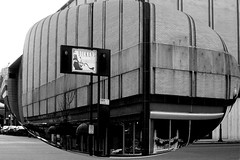
There is an unwritten rule in Portsmouth, Ted, regarding structures like Marting’s. No empty house or building owned by one of the over-privileged is so worthless and unattractive that it cannot be unloaded on the city or county and converted at great public expense for some public use. Think not only of Marting's but also of the Kenrick and Adelphia buildings. On the other hand, no public or religious building, no matter how architecturally distinguished and historically important, can escape being torn down to make way for a jail or a parking lot. Think of the razed N&W railroad terminal. Think of the razed old United Wesley Methodist Church. Think of the Municipal Building, where you swore Kalb in. I was surprised to see that he allowed you to risk your life by entering that building to swear him in. The Municipal Building is at the top of Kalb's "This Property is Dangerous and Condemned" list. Some developer has his eye on that property, as Kalb has admitted, which is the real reason it will be bulldozed. We can be thankful that the U.S. Post office is federal, not city property. The Post Office is of the same age and style as the Municipal Building, but it has not been deliberately neglected to justify tearing it down.

It was the citizens, Ted, who pressured the city government to put the Marting issue on the ballot. Since you stood with Kalb at the swearing in, you might be asked during your campaign where you stand on the Marting building. Because of Kalb, you could be dragged into a scandal created by the Republicans Johnson and Hatcher. If you support keeping the Marting building alive, you could be seen as another Dr. Bill Frist (R. Tenn.), who disagreed with Terri Schiavo’s doctors that she was in “a persistent vegetative state.” And if you don’t support keeping Marting’s alive, you risk being perceived by the Portsmouth politicians and over-privileged as a “domestic terrorist.” I will return to the issue of “domestic terrorism” in a moment.

Kalb is not the only Portsmouth politician you were endorsing by administering him the oath of office. You were also endorsing his allies on the city council, such as the oafish Marty Mohr, mugging for Joe Ferguson in an infamously defiant pose (left.) Shrewdly deciding he was not going to be one of the council members who were recalled because they had defended the city’s purchase of the Marting building, Mohr had said in 2004, in perhaps his first and last honest public statement, “It ain’t worth anything.” Since then, after meeting with Clayton Johnson, Mohr has done a complete turnaround and enthusiastically endorsed the purchase of the Marting building. (Timothy Loper won a recall election in Ward 1 by running as a critic of the Marting purchase, but he too promptly switched his position once he was on the council.) According to Marty Mohr’s math, which is as fuzzy as councilman David Malone’s, the city is now getting a great bargain because it is paying “only” $400,000 for the Marting building.

Let me explain, Ted, how Mohr figured that paying $400,000 for the Marting building is a great deal when less than two years ago he said, “It ain’t worth anything.” You see, Ted, Clayton Johnson and the Marting Foundation, through poor investments, lost $400,000 of the $1.8 million it had illegally obtained from the city when it sold it the Marting building. When Judge Marshall ruled the sale illegal, Johnson was obligated to return the $1.8 million and take a $400,000 loss, but Johnson worked out a deal with Portsmouth’s crooked city council and with Mohr and Kalb in particular by the terms of which the city had to keep ownership of the decrepit building in exchange for the $400,000 Johnson was not returning. Oh, and get this, Ted: as part of the deal, Johnson dictated a number of conditions about the building the city had to agree to before he would give back any money. It was like a swindler agreeing to return part of the money he had obtained for selling worthless property, minus $400,000, but only if the victim, in this case the city, also agreed to take the worthless property off his hands.

Johnson’s offer of the Marting building to the city was spun as a philanthropic act, for the sake of Portsmouth’s dearly-beloved-but-long-since-departed Downtown, but in fact what Johnson as head of the Marting Foundation was doing in the name of philanthropy was unloading a property that was costing the Foundation money in the form of taxes, a property he had no hope of unloading on any retail merchandiser with an ounce of business sense. Furthermore, if the Marting building was used for public purposes, i.e., as a municipal building, the Foundation could take a tax write-off. The Marting building is like the old maid in the card game: whoever ends up with it loses, and Johnson is determined the Marting Foundation is not going to be the loser. Given the low level of intelligence and even lower level of ethics in the city government, Johnson is not having much trouble turning the city government, and the over-taxed people of Portsmouth, into the losers.

Do you see, Ted, what you were stepping into when you stepped into the Municipal Building on January 1 to administer the oath of office to Kalb? And that is not the half of it.

The opening prayer on the swearing-in on January 1 was offered up by our adulterous “praying councilman,” Rev. David Malone. Along with his felonious brother Michael, the convicted forger who came within a vote of joining his brother on the city council, David Malone was the sponsor of a religious revival in Portsmouth that had been inspired by a guest preacher associated with the Deeper Life movement. The Deeper Life movement was exposed by the Tampa Tribune as yet another religious fraud, as I pointed out in my blog “My Brother’s Keeper.” One of the tenets of the Deeper Life movement is that you don’t criticize Deeper Life church leaders, no one of whom, it seems, is less than a bishop. We are to think only positive thoughts about all our leaders, whatever community we are part of, whether they are bishops or public officials. (Come to think of it, the Daily Times has been following the Deeper Life philosophy for years.) I was present at a City Council meeting at which the felonious Michael Malone preached the Deeper Life philosophy to the City Council, even as he was continuing to pursue his chief means of income, writing back checks.

The voters in Rev. David Malone’s ward were not thinking positive thoughts about him last year and might have recalled him from office if his opponent, Native American Russell Cooper, had not been arrested for allegedly forging signatures on recall petitions. The charges against Cooper were dropped at the city level because City Solicitor David Kuhn dropped the ball, but the ball has been picked up again at the county level by County Prosecutor Mark Kuhn, his nephew. Meanwhile, Rev. David Malone still sits on the city council and prays at public ceremonies, such as the swearing in on January 1 that you dignified with your presence.

Police Chief Horner

A zealous investigation of Russell Cooper’s alleged forgeries was carried out by the Portsmouth Police Department under the direction of Chief Charles Horner, who incidentally, has his own mini-Marting going on. He had from the start endorsed the proposal to convert the Adelphia building, another empty building that "ain't worth anything" into a public facility, a police station, so the over-privileged absentee landlord could get a tax write-off. The Adelphia building, occupying a streetcorner, could be called “Horner’s Corner.”

adelphia
“Horner's Corner,” with ubiquitous Hatcher sign (left)

Anyway, Ted, it was Horner who said in remarks to the City Council (9 Jan. 06), “I chose not to become involved in any other recall[election] because it [the investigation of Cooper] was so time-consuming.” And what was the result of Horner’s time-consuming investigation of Cooper? Cooper was guilty, Horner told the City Council on the same occasion, of “a series of improprieties.” An impropriety is something that is improper, something that is not suitable. Since when is an impropriety, even a series of them, a felony? If series of improprieties are felonies then what about councilman Mohr, with his bizarre statements at council meetings about punching the mouths and slashing the tires of drivers who illegally park downtown?

One of the reasons there are so many drug-dealers and prostitutes, we were told by an “investigative” reporter of the Portsmouth Daily Times is that local law enforcement officials have such scrupulous regard for the constitutional rights of all citizens, including drug dealers and prostitutes. But, Ted, what of Cooper’s constitutional rights? Why did City Solicitor Kuhn and City Clerk Aeh rush to judgment on him? Why were Chief Horner’s officers so thorough in its investigation of him? Why did they put him under surveillance and harass him, which is what Cooper has charged? Why have charges against him been dropped and then brought again? Is it part of a concerted effort to insure that David Malone would continue to serve on the city council and do the bidding of Johnson and Hatcher? Is it part of a concerted effort to discredit the recall process and change the city charter to make it even harder than it already is to win a recall election? The recall provisions in the city charter are more stringent than Ohio law requires them to be, the only honest councilman Bob Mollette claims, and yet the city council he patiently takes to task each meeting is determined to make the process by which they can be removed from office even more difficult. And why? To cover their corrupt political hides.

Howard Baughman and Mohr are now attempting to make it more difficult for citizens to recall elected public officials, claiming that that right is being abused under the present city charter provisions, that it is now too easy to recall. Too easy! Tell that to Russell Cooper. Tell that to Richard Noel. The majority of voters in Noel’s ward obviously preferred him to Marty Mohr, but because of the difficulty and confusion inherent in the current recall process, Mohr was returned to city council by relatively few votes.

David Malone claimed that voters would try to recall him if they didn’t like the color of his eyes. It is not the color of Malone’s eyes but his dishonesty, hypocrisy, incompetence, and adultery that made him a recall target. Chief Horner would not have his job if Bauer had not been recalled, because it is no secret that one of the first things Bauer would have done if reelected was fire Horner, whom the Shawnee Sentinel has long accused of corruption. Horner and Kalb and Loper would not be where they are now if citizens had not exercised their right of recall. But now members of the Kalb-led city government, as bad as the Bauer-led government ever was, wants to reduce if not eliminate the risk that they will someday be recalled from office.

What is behind all the recall activity are not domestic terrorists but a group of informed and concerned citizens who are deeply disturbed by the political corruption in Portsmouth, a corruption that emerged odiferously in the Marting scandal, like raw sewage backing up in the sewer pipes on Grandview Avenue. We have had as many attempts at recall as we have had not because we have a group of domestic terrorists in our midst but because we have a group of corrupt politicians who are pawns of the over-privileged of Portsmouth.

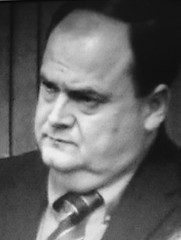
In closing, Ted, I want to repeat what I said at the beginning: the current city government is as much an embarrassment and threat to democracy locally as the current administration in Washington is nationally. At last Monday night’s council meeting, Chief Horner denounced those who have attempted to recall elected officials as “domestic terrorists.” The likeness of Horner (left), taken from a video of the council meeting, shows the police chief just before he rose to make his inflammatory accusation. What he told the City Council was, “A group of individuals have seized that recall process to engage in what I perceive as a form of domestic terrorism in this community.” (Teresa Mollette has an audio recording of Horner’s outrageous "domestic terrorism" remark on her website.) And then Horner went on to say, “I don’t think we can allow that to happen. Something should be done.” Something is being done, Ted. Cooper has been arrested for what Horner has said are “a series of improprieties.” And the city council is moving to change the city charter to make recalls even harder to accomplish than they already are.

Cooper claims that there is bad blood between himself and Kuhn going back to the mid-1980s. Kuhn is an amateur anthropologist with an interest in Indian artifacts. Cooper claims Kuhn is an Indian grave-robber. Native Americans are reportedly planning to come to Portsmouth to demonstrate on Cooper’s behalf, because they assume one of their own is being railroaded. They know that some arrogant white people, such as Abramoff, consider Indians “morons,” “troglodytes” and “idiots.” We can add Chief Horner’s “domestic terrorist” to Abramoff’s list of epithets.

Portsmouth is a microcosm of Washington, Ted, and you apparently are unaware of it. Or, even worse, you are aware of it but are going along to get elected. Based on what I know of you, I find that hard to believe. Distance yourself from this “domestic terrorism” crap, Ted, and distance yourself from a police chief who serves at the pleasure of Mayor Kalb; distance yourself from councilman Marty Mohr, who at a recent council meeting was recorded encouraging the punching of parking violators in the mouth and the slashing of their tires; distance yourself from the SOGP pork addicts, or be prepared to pay the electoral consequences. I look forward to being proved wrong. I look forward to seeing you sworn in as governor, but you may not be if you continue to show the kind of political misjudgment you recently showed at the beginning of the new year in Portsmouth. The proverb says “Those who lie down with dogs rise with fleas.” I say those who lie down with lousy politicians will be dogged for the duration of the campaign.


Thursday, January 05, 2006

Droit du Seigner

Scioto County Courthouse

Native American Russell Cooper, who tried to run for Portsmouth City Council last year, was accused of being a forger. As a result of the City Clerk’s and the City Solicitor’s investigations, Cooper was charged with having forged signatures on his election petitions.

The forgery charges against Cooper have since been dropped, as veterans in the reform movement had predicted they would be once they had served their political purpose, which was to prevent Cooper from effectively challenging David Malone for the Ward 2 council seat in a special recall election. Viewed as hypocritical and incompetent by a number of voters in his ward, Malone, the “praying councilman,” was perhaps the member most vulnerable to recall. The rush to judgment on the part of City Clerk Aeh and City Solicitor David Kuhn on Cooper’s alleged forgeries had the effect of keeping a rubber-stamp incumbent, David Malone, on the city council and a reform candidate, Cooper, off.

I have copies of Cooper’s petitions and I can see that there are questionable signatures on them, but since several of those whose signatures were allegedly forged had extensive criminal records, to immediately assume that it was Cooper who was responsible for the alleged forgeries was a convenient way to scuttle his candidacy. Cooper had no trouble finding enough Ward 2 voters willing to sign his petition, so why would he have forged signatures? It does not make sense. Where is the motivation?

Cooper:Wrage

Cooper (left) with lawyer as he faced charges of forgery

I believe there is a double standard in Portsmouth when it comes to forgers and alleged forgers, depending upon whether they are supporters or critics of the over-privileged of Portsmouth. Remember that convicted forger Michael Malone, who was a supporter, not a critic of the over-privileged, came within one vote of defeating his rival, the reformer Bob Mollette, in a city council recall election in 2004. Michael Malone, brother of councilman David Malone, claims he asked City Solicitor David Kuhn and City Clerk Jo Ann Aeh whether he could, as a felon who had been convicted of forgery, run for public office. Malone claimed he was told he could run. In the course of Michael Malone’s campaign, no one revealed that he was a convicted forger, not the City Solicitor, not the City Clerk, not his brother David, not the Portsmouth Daily Times, and not anyone else. The voters in Ward 3 were kept in the dark, as was everyone else. It was only after the election that Harold Daub discovered Michael Malone had served time for forgery. The double standard for forgers had probably protected Michael Malone, who had made it clear during the campaign that he was not one of the troublemakers, not one of the reformers, who were trying to recall elected officials.

In addition to having copies of Cooper’s disputed election petitions, I also have in my possession a photocopy of an older document that could serve as a classic example of the double standard that exists in Portsmouth in regard to forgers, which is a certified copy of a marriage license that is on file in the probate offices in Scioto County courthouse. That license purports to show that a marriage took place back in the 1960s between a Portsmouth woman and a soldier who was living at the time, temporarily, in Athens, Ohio. In researching the names on the marriage license, I found no evidence of the existence of the soldier, or anyone else whose name is on it except Scioto County Probate Judge Paul E. Fowler and the putative bride.

Fowler Building

It has been known for years by friends of the woman that the marriage in question never took place, and that the woman in question had been impregnated by Fowler, a member of an old and prominent Portsmouth family. The Fowler Building, in downtown Portsmouth, is an architectural reminder of the importance of the Fowler family. In his capacity as probate judge, Fowler signed the marriage license for a marriage that I could find no evidence had ever taken place. The marriage certificate is, as far as I have been able to determine, a forgery, apparently to cover up the fact that the “bride” listed on it was carrying Judge Fowler’s child. He signed a marriage license that has the earmarks of a clumsy forgery that contains the fictitious name and therefore the forged signature of a husband who did not exist, and the forged signature of a minister who, as far as I could discover, also did not exist, although I did find a minister with the same unusual name who lived in St. Louis in the late 1800s. The certificate also contains the names of the groom’s parents, whose existence I could not confirm. I have no knowledge of the circumstances surrounding the forgery, but I came up with an imaginary forgery in a short story for a blog in River Vices.

The broader implications of the unusual marriage license are worth noting. Probate records are what make civil society possible. Our legal identity, who we are as citizens, depends upon such records. The family, on which society as we know it depends, needs to keep clear who is a father and mother and who is a son and daughter. Without those family distinctions remaining clear and without probate records to prove their accuracy, we could end up singing, in the words of a comic song, “I’m my own grandpa.” How could a judge charged with the responsibility for assuring the integrity of probate records have anything to do with the criminal falsification of even one of those records? We don’t expect a fire chief to burn a church down or a lifeguard to drown someone. How could a family man and pillar of the community, how could a member of the Wesley Methodist Church and the distinguished president of the National Judges Association, how could a former member of the Ohio state legislature and an assistant attorney general of Ohio, how could a respected person in a position of public trust have dared to be party to an act that at the very least would have scandalized his family and ruined his career, and probably have resulted in some kind of jail time? I heard Newt Gingrich, of all people, recently say on TV, in a discussion of the Abramoff scandal, in which Ohio congressman Ney is implicated, that public officials who betray their public trust should be shown no mercy.

I have spent a several years trying to figure out the answer to why Judge Fowler did what he apparently did. Some of those who knew him thought he was eccentric, but no one considered him crazy. So the only answer I can come up with is that he dared to do what he did because the over-privileged of Portsmouth, the people in positions of authority, have been getting away with so much for so long that they are conditioned to think they are above the law. After all, who was going to look into the matter, even if they heard rumors of Fowler's waywardness? Who was going to go poking around in probate records? The city or county prosecutor? A reporter for the Portsmouth Daily Times? Fat chance.

A fire chief is in the best situation to get away with arson and a probate judge to falsify probate records, but if there is a pregnant woman in the picture any advantages the fire chief or judge has are more than outweighed by the desperateness of his situation. The original marriage license, on file at the county courthouse, is so obviously a frantic whited-out cut-and-paste document that it resembles a ransom note as much as a marriage license. It would not have taken a Sherlock Holmes or a Woodward and Bernstein to conclude there was something very suspicious about it. The marriage certificate indicates forgery far more than do Russ Cooper’s election petitions do, but Cooper is not one of Portsmouth's over-privileged, and that makes all the difference.

I would not have written about an old marriage license and exhumed this matter if it did not have direct relevance to the central theme of River Vices, which is the outrageous but long-running abuse of power on the part of the over-privileged of Portsmouth. However, compared to some of the crooked characters who control Portsmouth today, Judge Fowler was a scholar and a gentleman.

There is something feudal about social relations in Scioto County, and droit du seigner, the supposed right of the feudal lord to spend the first night with the brides of his lowly subjects, may have been one of the lordly privileges Fowler felt he was entitled to, although in this case the groom appears to have been imaginary. A probate judge signed off on a forged marriage license that covered up illicit behavior, and he was never called to account for it. By contrast, a native American who presumed to run for public office against one of the adulterous pawns of the over-privileged was arrested and accused of forging signatures on election petitions on the basis of a very dubious evidence.

I regret that in this blog I may be toppling a departed pillar of the community, just as a bulldozer last November toppled the tower of the Wesley Methodist Church, which Fowler, ironically, belonged to. But I am not doing it just to make room for another parking lot. I am doing it to make way for a truth, unfortunately an unpleasant truth, and that is that even one of the most respected and trusted of Portsmouth's over-privileged could not resist the temptation of thinking he was a law unto himself. And if that is what a "gentleman and a scholar" dared to do, it is even worse now with some of the unscrupulous characters who are in positions of authority and influence in our community, characters who have been screwing the public so long they think it is their birthright, like the droit du seigner.

Saturday, December 24, 2005

The Frog and the Scorpion


Interest-Based Bargaining

Interest-based bargaining, or IBB, as an online site explains, “is an attempt to move labor and management from traditional confrontational and positional bargaining to problem solving bargaining by identifying issues and exploring the different possible solutions. The parties are encouraged to work together to find solutions to each other’s problems. They do not come to the bargaining table with proposals as in traditional bargaining. Instead, they present problems to be solved. Together they will seek solutions to those problems.”

Back in 1999 at Shawnee State University, when I was serving the first of four terms as president of the Shawnee Education Association (SEA), the faculty union, I and the other union officers, in spite of some misgivings, suggested to the administration that we use Interest-based bargaining for the 2000 round of contract negotiations. We borrowed the idea of using IBB from Bob Chase, the president of the powerful teacher’s union, the National Education Association (NEA), of which SEA was an Ohio affiliate. Interest-based bargaining was one of the elements in Chase’s innovative “New Unionism.” “After much soul-searching and self-criticism within NEA,” Chase had said in a speech in Washington, “we know it’s time to create a new union – an association with an entirely new approach to our members, to our critics, and to our colleagues on the other side of the bargaining table.”

SEA proposing to use IBB in contract negotiations at Shawnee State was like Geronimo proposing to General Custer that they bury the hatchet. In the past, the relations between the faculty and administration at SSU had been terrible, and we thought IBB might offer both sides the chance to improve the notoriously acrimonious relationship. The SEA leadership dared to hope it was possible to change because SSU had a popular new president, James P. Chapman, who publicly endorsed SEA’s Interest-based bargaining proposal. I would not have supported IBB if Chapman had not been president, but I trusted and respected him as a person of integrity, and so did many other faculty. Chapman’s predecessor, Clive Veri, had only a 5% approval rating in his last years in office. For Chapman, it would have been something like 95%

NEA's Chase at SSU

To help adjust the campus community to the idea of IBB, SEA hosted a banquet at the Riffe Center at which NEA president Chase was the featured speaker. In his address, Chase urged the SEA and the SSU administration to work with instead of against each other. He pointed out, “You do have a new president of both the university and the union who are willing to move in some different directions, to look at some different approaches.”

chase-Forrey

The trustees agreed, with some reluctance, to try IBB in the negotiations for the 2000-2003 contract, and the results were encouraging. For the first time in the university’s fifteen-year history, the word strike was not uttered once during negotiations. I later published “The ‘New Unionism’ Replaces the Old at Shawnee State,” in Thought & Action, the National Educational Association journal for higher education. I concluded that article by saying that the chances of the New Unionism taking hold at Shawnee State were at best about fifty-fifty, but I added that if the New Unionism could work at Shawnee State, “it could work anywhere.”

Undermining New Unionism

Those negotiations were a success, but the New Unionism, and the spirit of cooperation it represented, did not take hold at SSU, largely because some influential and unprincipled trustees, known as the “gang of four,” never intended that it would. These four trustees proved to be totally untrustworthy. What they did was take advantage of the campus thaw brought about by the New Unionism to allow President Chapman and the faculty to resolve several major chronic problems at the university, especially the problem of governance, which the North Central Association had cited as a reason for withholding full accreditation from SSU. President Chapman, working harmoniously with the SEA and other campus constituencies, was able to resolve the governance problem, and a number of other serious problems as well. His performance as president was remarkable, but because he was not the kind of rubber-stamp supine president that the trustees had become accustomed to during the nine-year tenure of Chapman’s incompetent predecessor, the gang of four had resolved that after Chapman had solved several of SSU’s most serious problems, he would not be rehired when his three-year contract expired.

The trustees had hired a lawyer in 1993 to be the de facto president during President Veri’s reign of error, and it was that lawyer, Stephen P. Donohue, not Chapman, whom the gang of four were rumored to want to be the next president. The gang of four preferred that SSU continue to be ranked as one of the worst universities in the nation rather than that they lost their control over and exploitation of it. In order for a former trustee and Republican committee woman to be able to unload her empty Franklin Blvd. house off on the university, which would take a $50,000 loss on it; in order for the chairman of the trustees, Frank Waller, with two partners, to start a fly-by-night travel agency that would become SSU’s preferred travel agency; in order for a failed president reportedly facing serious legal charges to resign and receive a golden parachute as a parting gift; in order for these kinds of shenanigans to continue, it was necessary to remove anybody with scruples and backbone from SSU’s administration. Because Chapman represented an honest and effective style of leadership, he was about as welcome to the gang of four and the over-privileged of Portsmouth as Eliot Ness had been to Chicago racketeers during Prohibition. In some ways, Bob Mollette is now in a similar embattled position on the City Council, and the over-privileged of Portsmouth will not rest until he is removed.

Karla “Kay” Boynton Reynolds showed what the gang of four was plotting even as the Interest-based bargaining negotiations were successfully getting started. On 7 June 2000, she sent a letter to SSU trustee chairman George Clayton. It was Clayton’s empty Kenrick's department store that was taken off his hands in a typical Portsmouth boondoggle, pork-fed real estate deal. “I realize we are in the mist [sic] of union negotiations,” Reynolds wrote, “and should present a united front. I firmly believe the leadership of SSU is the MOST important issue that we as trustees are handling. We should not let the negotiations overshadow our responsibilities.” What were those responsibilities? What was MOST important? To get rid of Chapman when the IBB negotiations were completed and provide new leadership, by which she meant another toady president like Veri, a president who would toe the line and allow the university lawyer to carry out the wishes of those non-educators who were in control of the university. If that president turned out to be incompetent, sleazy, and wildly unpopular, a president who had only semesters, football, and fraternities to offer a university in crisis, then that was a price they were willing to pay to maintain control over SSU. The university was treated as yet another of the pork projects on which the over-privileged of Portsmouth had come to depend economically since the city’s industrial and commercial base had begun migrating overseas a half century earlier.

The incredulous campus exploded when Chapman was not rehired, because during the relatively brief era of New Unionism he had worked miracles at SSU, and had given the faculty hope that we would no longer remain a dysfunctional institution at very bottom of the US News annual rankings of colleges. In three years, he had built up capital that the university has been living on – and frittering away – ever since.

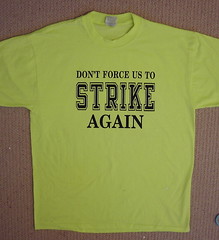
In 2003, after Chapman’s departure, when I was again serving as SEA president, the administration suggested that we repeat the use of Interest-based bargaining to negotiate the 2003-2006 contract. The trustees may have concluded that the faculty was no longer as militant as it had been in the pre-IBB days. As a result of a presidential search committee’s unusual spunkiness, we had a new SSU president who gave us reason to be thankful simply because she was not Stephen P. Donohue or Michael Field, the presidential preferences of the gang of four. We did what we could to support Rita Rice Morris, including agreeing to use IBB again. We agreed to it, but we were wary, and wisely so. Mutual trust was lacking, and when we concluded that the leopard had still not lost its spots, nor the scorpion its sting, the mood turned ugly on campus once more, as it almost always had in negotiations in the past. The 2003-2006 contract was settled only after the SEA formed a Crisis Committee, which began to lay the groundwork for a strike, and only after SEA members authorized the negotiating team to conduct a strike vote. Whatever gains we made in the 2003-2006 contract we owed not so much to IBB as to the SEA’s traditional militancy. I have a shirt as a reminder of that militancy.

In recent SEA elections, the presidency and vice presidency were won by candidates whom faculty believed would be the strongest leaders in the contract negotiations that will begin in the new year. Whether IBB will be attempted again is up to a new generation of SEA leaders. Four past SEA presidents, including myself, retired this year, and a fifth will soon. A younger generation may find a way to end the dysfunctional state of affairs that has plagued Shawnee State in its 20 years as a university. Maybe something like IBB will eventually help end that cycle. But now that I am aware of the larger political context in which the university exists, I can appreciate the wisdom of something Professor Larry Essman, a Portsmouth native and a past SEA president told me some time ago, which is that you cannot understand SSU unless you also understand the politics of Portsmouth. In the last few years I’ve come to learn something about Portsmouth’s politics, and I believe the problems at SSU, because they a part of the political corruption of Portsmouth, are more intractable than most faculty have any idea.

I found it hard to believe that some of the trustees were unable to see what an extraordinary opportunity the New Unionism represented for SSU back in 2000. Only now that I better understand the pork politics of Portsmouth can I begin to understand why the gang of four did what they did. A steady diet of pork for over a half-century has resulted in a glaring loss of initiative, honesty, and competence among the over-privileged of our river city. Elsewhere in America, we hope, people are still competing; in Portsmouth they are colluding. Elsewhere in America, people are working to solve problems; in Portsmouth the over-privileged are covering them up. And they apparently cannot help themselves.

The circumstances surrounding the 2000 Interest-based-bargaining negotiations, and the current trustee chairwoman's untrustworthy role in them, reminds me of the fable in which a scorpion pleads with the wary frog to carry him on his back across a river. Knowing what scorpions are notorious for, the frog refuses, but the scorpion persists, pointing out that if he stung the frog, he too would drown. Persuaded by the scorpion's argument, the frog reluctantly agrees. Halfway across the river, the scorpion fatally stings the frog. The dying frog incredulously asks the scorpion, “Why? Why?” The scorpion, who will soon die himself, answers, “Because I could not help myself. It’s my nature.”

Wednesday, December 14, 2005

Estate Plan Scam

estateflyer
Flyer from St. Mary's Church, Portsmouth

In November 2005, Teresa Mollette reported in her informative website that St. Mary’s [Catholic] Church was offering a free seminar in “estate planning,” (a euphemism for “making a will”) for older members of the parish. As a member of the parish, Teresa Mollete was offended by the flyer and by Clayton Johnson's name on it. As an ex-Catholic, I reflected on the flyer and the "estate planning" it seeks to promote, and here is my two cents worth.

I don’t know what it’s like to grow up Catholic now, in Portsmouth, Ohio, or anywhere else, but I know what it was like to grow up a Catholic in Boston back in the 1940s. At about the age of seven, some years before I had reached the stage where I could begin to think for myself, I was introduced, through priests and nuns, to all the horrors of hell that Catholic theologians had been imagining for centuries. I was taught as a child that that Protestants, Jews and almost everyone else were going straight to hell, and that only Catholics could escape this horrible place.

Back in the 1940s, many Catholics believed in the doctrine of Extra Ecclesiam Nulla Salus, or No Salvation Outside the Catholic Church. To say that this doctrine created a deep sense of dependency in Catholics upon the Church would be an understatement. Catholics were dependent not just upon Christ but upon the Church for their salvation. To use marketing terms, which are appropriate in this case, what the Church instilled in Catholics was the ultimate form of brand loyalty. Stick with the Church, be a good and faithful Catholic, and the reward will be eternal happiness. Could any other product possibly offer more?

Fast forward more than a half century. Those same children who were taught that the Church was their door to salvation are now senior citizens. Probably they have accumulated some worldly goods, they have an "estate." "If you have possessions you have an estate," as the first bulleted item on the St. Mary's flyer puts it. As a Catholic, you want to do right by those you love, especially your children and deserving relatives. But you cannot afford to forget heaven and hell, you cannot afford to forget the Church, which offered you the opportunity to escape hell. Yes, you have an obligation to those you love and who love you, but who loved you and offered you more than Jesus and his sacrifice upon the cross, and of all institutions on earth, which one truly represents Jesus? The Holy Roman Catholic Church. Of all your obligations, which is greater than your obligation, as a Catholic, to the Church? The mention of "stewardship" in the fourth bullet invokes the notion that whatever we acquire in life is a loan from the Lord, and Catholics need to pay at least part of it back, back not just to heirs but to the Church, which truly and exclusively represents Christ.

The St. Mary's flyer does not say anything about salvation. The closest it comes to tapping into the fears and hopes of seniors raised on Catholic dogma is the next to the last bullet, "It is easy to make a lasting contribution to our parish!" How easy? How lasting? Well, just "Come and meet our panel of professional Catholics who will answer your questions," to quote another of the bulleted items in the flyer.

Why is the Church engaging in this profane huckstering? Why is it resorting to flyers to promote estate planning, thereby putting it in the same class as Pizza Hut, three for the price of two, with three toppings? The Church is doing it because it is financially, not to mention spiritually, desperate. By the Church I mean the hierarchy, not the laity. Boston Globe columnist and former seminarian James Carroll wrote in "Basilica of Denial" that what the sexual abuse scandal reveals is “the moral bankruptcy of the entire Catholic clerical culture" (5 Dec. 2005). Whatever else it is, the Church is a business, a big business, and it is in big big trouble. Pride goeth before a fall, and flyers come humbling after.

Catholic anti-Semitism in Boston was no isolated phenomenon and found a champion in Father Leonard Feeney, who used to preach to large crowds on Boston Common. James Carroll writing in the Boston Globe (19 Dec. 2005) claimed in a column "What would Cardinal Cushing do?" that “there was an undercurrent of anti-Semitism in Feeney’s exclusivist claim for Catholicism.” Did Carroll hear Feeney preach on Boston Common, or did he stay away as Catholics were told to do by the Church? If Carroll had heard Feeney preach he would know that it was much much more than an undercurrent, and that Feeney was as anti-Semitic as Hitler was, and as for Archbishop, later Cardinal, Cushing, with his Jewish in-law, he was not the liberal hero Carroll makes him out to be. Although he was not crazy, as Feeney was, Cushing was a right-wing politician as well as a Cold War Catholic prelate with ties to such a right-wing figures of the period as candy manufacturer Robert Welch, one of the paranoid pillars of the John Birch Society. Yes, Archbishop Cushing took a stand against Feeney, but for the same reason the Republicans repudiated Senator Joseph McCarthy, because he was so mentally unbalanced he was doing much more harm than good in the crusade against communism. How was a Catholic like John F. Kennedy ever going to be elected president if Catholic doctrine condemned every non-Catholic voter to hell? No Feeney had to be muzzled, and there was time as it turned out, when Feeney was in his dotage, to claim that he had returned to the fold, something Feeney’s fanatical followers deny to this day.

The sexual abuse scandal that began proliferating more than a decade ago ended up costing the Church dearly financially, in terms both of draining legal settlements and of a further diminution in church attendance. The financial crisis created by pedophile priests forced the Church to “optimize” all sources of income. Bequests from deceased Catholics had always been important but now they are indispensable. After the financial meltdown of the last decade, Catholic laity with money, especially Catholic professionals, were among the few prized cash cows left in parish pastures. More aggressive estate planning became the most productive way of milking them. And it was to be done not in the name of the Church, the Holy Roman Catholic Church, whose name currently is mud, but in the name of the local parish. All politics is local, the Irish-Catholic congressman Tip O'Neill said, and so are all parishes.

In what typographically looks like a footnote, because it is at the bottom, unbulleted, and in small print, the flyer says "Clay Johnson, local attorney, will be participating in the presentation." (Beware the fine print in all documents, because the devil is usually in the details.) The flyer does not point out that Johnson is a Protestant, nor does it point out that in addition to being perhaps the most successful and influential lawyer in Portsmouth, he is also one of the most controversial and distrusted. In the view of his critics, he is the Presbyterian godfather of Portsmouth. He was the key figure in the notorious sale of the empty and virtually worthless Marting department building to the city for $2 million, a sale that has since been ruled illegal, and Marting’s, as visitors to Mollette’s website can see, is just the tip of the Johnson iceberg. But the important thing is not Johnson's religion but that he is successful, and usually gets his way, as he probably will in the Marting's deal, and why would you leave somebody like that off your Catholic dream team of professionals just because he isn't a Catholic?

St. Mary’s offering to assist seniors making out their wills, with Johnson as part of the team, sounds like a turkey farmer hiring a fox to help the turkeys prepare for Thanksgiving. St. Mary’s is not the only Catholic church offering to assist parishioners with their “estate planning." Parishes and Catholic agencies in other parts of the country are tuning up their estate planning efforts and occasionally turning to non-Catholic lawyers for advice and assistance. Martin M. Shenkman is a New Jersey lawyer whose practice focused on divorce cases before he shifted to estate planning. Shenkman’s publications include Divorce Rules For Men: A Man to Man Guide for Managing Your Split and Saving Thousands and also Inherit More, a how-to book on how children can maximize their inheritance from their parents, which sounds like a keep-it-in-the-family version of estate planning. Shenkman offered the following advice for Catholics online in a posting titled “Catholic Issues in Estate Planning”: “A religious person near the end of their life starts to look more towards spiritual matters. They often have the idea to do something good for their Parish, church or other worthy cause. It’s important for estate planners to facilitate giving clients the opportunity to accomplish these goals.” The use of the vague infinitive “to facilitate” and the somewhat paraphrastic construction of the sentences ("to do something good") is presumably evasive legalese whose goal is to avoid being too obvious about the underlying issue of “Catholic issues,” which is that while seniors are “looking towards spiritual matters,” the estate planners and lawyers should be looking toward financial matters and seeing that the Church gets its cut of the estate.

Forbes
Magazine, looking at the Church as a business, said that “Between tort lawsuits and declining attendance, the Roman Catholic Church in North America is a financial mess. . . . No one denies the American Church is in trouble. Over the past four decades regular attendance at Mass has collapsed from 75% of those who professed to be Catholic to 40% today. Nearly one in five churches doesn't have a resident priest. In those that do, parishioners are increasingly likely to hear Mass said in thickly accented English by a prelate from Nigeria or the Philippines. Many parishioners are still furious about the sex-abuse scandals – as well as the coverups and sizable payouts that followed – comparing their impact to the shock of Sept. 11.”

Estate scamming Msgr.


It’s not just the pedophile priests who are the problem. Don't forget Monsignor Eugene V. Clark, the 79-year-old rector of St. Patrick’s Cathedral, in New York, who was caught motelling with his younger married secretary, as I pointed out in “Viagra Chronicles,” or the New York high-life Monsignor John Woolsey, a leader in the right-to-life movement, who reportedly bilked an elderly parishioner who was nearing the end of hers of $500,000 so he could finance his Gucci-golfing lifestyle. Operating his own estate planning scam, he also got her to write her will in his favor. While the priest's good looks may have charmed the old lady, someone of her generation was likely to be more influenced by her conviction that he was the representative of the Church, which held the keys to the kingdom.

Because of the role the Church has claimed to occupy as the exclusive mediator of salvation, it is a scandalous conflict of interest for parishes to let their lawyers have anything to do with the estate planning of elderly Catholics, just as it was criminally negligent of the Church, and in particular Cardinal Bernard Law, the Archbishop emeritus of Boston, to let pedophile priests have anything to do with Catholic children. Elderly Catholics of my generation, and younger, who were terrorized as children with the threat of eternal damnation, especially if they are being advised by a clever lawyers in the employ of the Church, would understandably be inclined to will the Church a good chunk of the goods they accumulated in this world as a way of insuring that they would not roast eternally in the next.

The battered cross that lay on the site of the future Catholic parking lot for a month could serve as a reminder of how spiritual things sometimes get neglected in property exchanges and estate planning. I was told by one source that the money that the Church of the Holy Redeemer used to buy and demolish the old Methodist church, whose destruction I described in “Double Cross,” came from an anonymous well-to-do Catholic, suggesting that, some of the faithful may feel the road to heaven is paved with parking lots.

The Forbes article on the Church’s financial crisis concludes with the question, “Is ANYONE up there listening?” I will conclude with a different question: Is ANYONE up there counting how much you leave to the parish, i.e., the Church? If as a Catholic you even remotely suspect there is SOMEONE up there counting how much you leave, and who is making a hit list and checking it twice, then sign up for a freebee church-sponsored estate planning seminar because it’s a hell of a bargain.

Tuesday, December 06, 2005

Blogosphere

blogosphere


River Vices was born into the blogosphere in July of 2004, but I did not install a counter until six months later, on December 12th, 2004. I thought I would, on the occasion of this informal and otherwise unimportant anniversary, try to explain how this blog began, who and how many might be reading it, and where it might be heading.

But first the name. I chose River Vices as an ironic revision of River Voices, the name of the dvd documentary on the Portsmouth flood of 1937, produced by my Shawnee State colleague John Lorentz and his son Nathan. I had thought one of the first blogs I was going to write would be a deconstruction of the ideology of River Voices, but a year and a half later it is still undeconstructed. Less directly, the name River Vices owes something to Herman Melville's bitter novel The Confidence Man, about a riverboat con artist, in his various guises, and about an America that had become degraded by a hucksterist riverfront mentality.

How did I come to take a corrupt river town as the subject for a blog? For almost fifteen years I was deeply involved at Shawnee State University, especially in the affairs of the faculty union, the Shawnee Education Association, which I served as president for four terms. I was also managing editor of and wrote for the union newsletter, SEAView. I also wrote several articles on the shenanigans at the university in the Shawnee Sentinel, a newspaper started by students who were disturbed by the way in which some trustees and administrators acted as if SSU was just another of the pork-barrel projects that Portsmouth's over-privileged had come to think of as their private preserve.

Though I was deeply involved in the political life of the university for fifteen years, I cannot believe, looking back now, how little I knew about Portsmouth, the city the university was located in. What changed that was digital technology. As an English professor, I had come to feel that teaching most SSU students how to write essays was an exercise in futility. In culturally deprived families (which is to say in most American families) television has served as a babysitter for successive generations of American children, so it is not their fault that many of them, used to being entertained by Saturday morning cartoons, MTV, Walkmans and Ipods, find reading and writing as unnatural and difficult as walking on their hands. They are further disadvantaged by having the attention span of a fly as a result of having seen, in their formative years, 20,000 60-second commercials. I had come to feel that if they could learn how to create visual essays, with video cameras, they might understand that the same creative and editing skills needed to make a video essay were also needed to write a composition. I wanted to turn their cultrual disadvantages to their advantage.

But before I could teach students how to create essays with a digital camera, I had to learn how to do it myself. To help me learn, I chose as the subject for a video essay the political recall process that was going on in Portsmouth, focusing on the recall of the mayor in particular. When I started work on my video essay The Recall of Mayor Bauer, I had little knowledge of videography and even less of Portsmouth politics. I had no opinions about the elected city officials who were facing recall. Starting out, I assumed I was making a documentary, but even before I was finished I was persuaded by the “recallers” that Portsmouth city government was flagrantly corrupt. One of the persistent metaphors in Recall of Mayor Bauer and in River Vices has been prostitution, but I feel guilty about resorting to it because I know those hard-working and abused women on John St. do not deserve to be insulted by being compared with the crooked Portsmouth politicians and their over-privileged patrons.

I was all too familiar with the way in which the university was in the control of local politicians and the over-privileged, who were largely responsible for its poor academic reputation, but I had not understood how much the university was integrated in to and a reflection of the political corruption of the city and county, and to some extent of the state, government. What made the corruption so pervasive was that it was bi-partisan. Yes, Republicans predominated in southern Ohio, but only because the relatively few Democrats in public office played ball with them. At the local level, party affiliation is not important. If Portsmouth is typical, a popular aphorism should be revised to say, “All politics is local and all local politics is corrupt.”

River Vices was my attempt to use the new internet technology to write regularly about the political corruption of Portsmouth. Mark Twain was one of my inspirations for the undertaking. Not long after getting underway, I discovered another inspiration for sustaining it: the conservative Republican author, Jesse Stuart. What Stuart helped me understand, especially in his best novel Taps for Private Tussie, is how much government pork has corrupted the region.In his novels at least, Stuart was not sentimental or politically correct about Appalachian culture. You can take the people out of the hills, but you can't take the hills out of the people. If competition is a key to explaining the American character, (and I’m not sure that it is) don’t look for evidence of initiative in southern Ohio. With the departure of major manufacturing and industry from Portsmouth beginning over a half century ago, the politically shrewd realized that under the banner of the War on Poverty the government could be milked for many millions, much of which went into the pockets not of the poor but of the over-privileged of Portsmouth. Instead of initiative and enterprise, the traits that flourished were connivance and cover up, cover up of the corruption of local government, and cover up of the incompetence that the lack of competition has resulted in. Corruption and cover up are by now so deeply ingrained in the local culture that I can believe a political revolution could occur at the national and perhaps even state level and Portsmouth would hardly be affected by it.


rvreaders
Geographical Distribution of River Vices Readers

Over 20,000 hits have been recorded on River Vices in the past twelve months. River Vices now gets anywhere from 600 to 900 hits a week, and growing, so the numberof hits may be 40,000 next year. I know I have appreciative readers in Scioto County, because I have met some of them through chance encounters. But I have been surprised at how many River Vices readers are out of southern Ohio and how many, about 25%, in any given week, are outside of the United States. It may be, given the word “vices” in the name of the blog, that international surfers are expecting something other than southern Ohio politics. But the 2% in Iran who have shown up fairly regularly must know what they are looking for. The unexpected 5% from Italy for this past week might have something to do with the religious issues raised in my last blog “Double Cross.”

I early on decided I wanted to write essays, focused on one issue, and not just jottings or thoughts off the top of the head, as interesting as those can be from people smarter than me. The brilliant linguist and political activist Noam Chomsky is not a very good writer, but he is a good talker. Good talkers do not usually make good writers. Essays take time, even when they might not win any prizes. And an essay is not what busy people with lots of other ways to spend their time are looking for. One of my readers said it was necessary to have a master’s degree to understand my blogs, which remark is anything but flattering since clarity is my highest priority as a writer. But I also heard a veteran activist say that when he got discouraged and felt things are probably always going to be hopeless in Portsmouth, he reads some of my past blogs for inspiration. When I am looking for inspiration, I read Arthur Hugh Clough's poem "Say not the struggle naught availeth . . ."

There is a history of my hometown, Revere, Massachusetts, that I have been trying to finish for a very long time, and I am afraid because of River Vices I may never finish it, even though I am now retired. Ars longa, vita brevis (art is long, life is short) is the motto of the Modern Language Association. You have to retire to realize how very little time you really have. Given the slowness with which I write, I will not finish the book unless I stop or suspend this blog. The book I see as an obligation to the past and to my hometown; River Vices I see as an obligation to the future and to my adopted town Portsmouth. But either way I am sentenced to the sentence, or in my case to the essay, and there is no escape from the blogosphere, with or without an M.A.

Thursday, December 01, 2005

Double Cross


Architectural Blight 

       The over-privileged of Portsmouth, Ohio, most of whom are white males, have blighted the city not only economically but also architecturally, giving residents of the city a double cross to bear. Not only must residents live with poverty but also with ugliness, for the relatively few public buildings with historic value and architectural distinction are torn down to make way for parking lots, jails, and shopping centers while millions of dollars of public monies are used to save unattractive virtually worthless commercial structures and convert them at great public expense into public-use buildings, as is the case with the former Kenrick’s store, which is now the architecturally soulless Scioto County Welcome Center. That will probably eventually also be the case with the 100-year-old Marting’s department store, which may become Portsmouth's city hall, and the Adelphia Cable building, which will become the police station. The reason why empty relatively worthless commercial structures in downtown Portsmouth are saved is not because they have any commercial, historic and certainly not any architectural value but mainly because they are owned by the over-privileged, who are accustomed to having the politicians whom they help elect to office bail them out by taking their worthless properties off their hands with monies derived from pork barrel subsidies and increased taxes.


When the Cross Came Crashing Down


Since the cross is the most sacred symbol of Christianity, I expected at some point prior to the demolition of the tower that it would be carefully if not reverentially removed. Certainly the time and small additional expense that removing the cross entailed should have been no impediment to removing and safely storing it. There is a protocol for the treatment and disposal of American flags. Isn’t there also for the treatment and disposal of crosses? My curiosity about the cross increased after I heard a news report about the bombing of two Shiite mosques in Iraq. When Shiite rescuers rushed in, they reportedly looked immediately for two things: worshippers who might have survived the blast and copies of the Koran, the Muslim holy book. I wondered if the Methodists, or Neal Hatcher, would show anything like that regard for the cross. They did not, for the cross was still on the top of the tower when it came tumbling down, and after it was dragged off the pile of rubble (pictured above), it lay, battered on the ground (pictured below), for over a month afterwards.


Cross Rusting in Two Pieces Months Later


     On Saturday, November 19, 2005, another of the city’s architectural treasures, the old Methodist church at the northwest corner of Gallia and Offnere Streets was torn down to make way for a parking lot. As it scrambled to survive, the Methodist church changed names several times. To distinguish it from the new Methodist church on the northeast corner of Offnere and Gallia, I will refer to the old one on the northwest corner by one of its previous names, the Wesley United Methodist Church.


Shall We Gather at the Wrecking of the Church?

      Though it was a mild afternoon, only a handful of curious onlookers had gathered on Gallia Street to watch Neal Hatcher’s J.N. H. Company complete the demolition of the Wesley Church. Yes, this would be another Hatcher job. (I am told Boone Coleman, the Portsmouth demolisher of choice who has had his problems with OSHA, was tied up with the work on Route 23.) Only the tall tower of the Wesley United remained, for in the preceding weeks the rest of the church had been gutted and demolished.
      Possibly the crowd would have been larger if Ohio State had not been playing Michigan that afternoon, which may have been why some of the spectators remained in their cars – to listen to the Buckeyes, for whom there is a kind of religious devotion and even fanaticism throughout Ohio. If there were state religions, as there are state flowers, birds, and songs, Ohio’s would be the Ohio State football team, the dearly beloved Buckeyes. Nothing is more important to the fanatical Buckeye followers than the defeat of the hated Michigan Wolverines, so this Saturday of all Saturdays was not a good time for demolition watching.
      Most of the people sitting in their cars and standing around in small groups appeared to be curiosity seekers who were willing to wait hours to see the four-second spectacle of a tower crashing to the ground, just as pedestrians might gather silently on a street of New York City to watch someone on a ledge jump to his death, or just as a crowd might have gathered to see a public hanging or a burning at the stake in Europe in the Age of Faith. “Portsmouth is a boring town. There’s not much here to do,” someone said to me recently. I saw no sign of reverence for the building or regret that one of Portsmouth’s architectural landmarks was about to come crashing down. I had thought that at least a small delegation from the church’s now relocated congregation would be present to witness the final hour of their historic church, as children might gather at the bedside of a dying parent, but there was no sign of mourners. A few older members of the old church, some of whom left the congregation in silent protest, subsequently told me the demolition was too painful to witness. We live now in a throw-away economy, and apparently old churches, like disposable contact lenses and razors, can be tossed out unceremoniously.
      The Methodists had sold the old church and the site to the neighboring Holy Redeemer [Catholic] Church, which wanted the land for a parking lot. According to a Catholic friend of mine, the Holy Redeemer Church did not want to have the onus of tearing down a historic Protestant landmark to make way for a parking lot for Catholics. Perhaps they did not want to appear to be violating the commandment, “Thou shalt not covet thy neighbor’s church for a parking lot.” As Pilate washed his hands of any responsibility for the execution of Christ, the Catholics wanted to wash their hands of responsibility for the destruction of a Protestant landmark. They wanted somebody else to do the dirty work, which fell to Hatcher. But to judge by the apparent indifference of most Methodists to the demolition of their church and the treatment of the holiest symbol of their faith, the cross, the Catholics’ concern about Protestant sensibilities appear to have been unwarranted.
      I had followed the demolition for several weeks and especially wanted to see what would happen to the large white cross in the tower of the old church. I had learned that a cross had first been added to the church tower in 1930. Because it was illuminated by screw-in light bulbs, like an old marquee, and because it also revolved, the cross was something to behold on Portsmouth’s skyline in the 1930s, and of course a cardinal rule of our commercialized world is "It pays to advertise." An older member of the church who had changed burned-out bulbs in the old cross way-back-when told me of the heart-stopping challenge the wind and a rickety ladder presented.
     The revolving cross was later replaced by the seven-foot white hollow sheet metal cross that remained on the top of the tower until the demolition of November 19, 2005. Another older member of the church told me she was present at a dedication ceremony for the new cross, suggesting that the putting up, if not the taking down, of a cross was a still an occasion for solemn commemoration. The contrast between the Muslims’ reverence for copies of the Koran and the Methodists’ casual attitude toward the cross may reveal something important about differences between Islam and Christianity, and particularly the tactical advantages the followers of Mohammed have over the followers of Christ. Muslims and Christians both believe in their faith, but, judging by actions, not words, the Muslims believe more fervently in their faith than Christians do in theirs. The Muslims are more willing to kill and sacrifice their own lives for their faith than Christians are, which gives them an enormous tactical advantage in the religious war in which the U.S. and Islamic fundamentalists are now engaged. Muslim places of worship are places of worship, not glorified daycare centers, which is what I heard someone call the new Cornerstone United Methodist Church on the northeast corner of Gallia and Offnere.
     As I understand it, there is a place for worship in the new Cornerstone Church, but the space is not so sacred that it cannot be used, thanks to folding chairs, for some other purpose. And the sacramental space must not be so large as to displace the gymnasium. The old church had a gymnasium, too, but it was behind the church, where it was too accessible to rowdy elements, I was told. The new gymnasium is in a virtual gated community, which to a degree is what the whole new church is. The sacred and the inspiring have been replaced by the mundane and the useful: that is how I would summarize the criticisms I have heard of the new church. I am not criticizing the unorthodox architecture of the new church. Having closely studied the history of one New England church over its 200- year history, I know how the disposition of space in a church can change drastically to accommodate to the needs of successive congregations.
     There are rumors that other beautiful and historic Portsmouth church buildings will bite the dust, in some cases in order to provide more parking space. I said rumor, but remember that in Portsmouth a rumor is often a truth that readers of the Portsmouth Daily Times are the last to learn about. Not a believer myself, I appreciate the uplifting architecture of churches, and while the cross is not a sacred symbol to me, I can see in the slighting of it evidence that another symbol has replaced it in Portsmouth, namely the dollar sign. That would be bad enough, but in Portsmouth the dollar the sign stands for is often not earned, in the old- fashioned way, through initiative, rugged individualism, and competition but through cronyism and political corruption, which lead to pork and higher taxes.

Through transfusions of pork and higher taxes, the Marting Foundation is attempting to preserve the Marting department store as a shrine to the commercial spirit of Portsmouth. Older even than the Wesley United Methodist Church, and uglier than hell, the Marting department store is commercialism’s shrine in Portsmouth, whose putative prosperous downtown past is the Paradise lost which the Foundation is seeking to lead us back to. The appropriate symbol to put on top of the Marting building, if it becomes the Portsmouth city hall, is the dollar sign, for the double-crossers in the city hall will be as devoted to selling their souls as the sales people in Marting’s were to selling shoes. The dollar sign is held in greater awe in Portsmouth than the cross, and has followers who are even more devoted and passionate than Buckeye fans. Tear down all the churches in the city, and let the crosses fall where they may, as long as the public dollars continue to cross the palms of Portsmouth's over-privileged.