Saturday, May 13, 2006

The Missing Link

missinglink

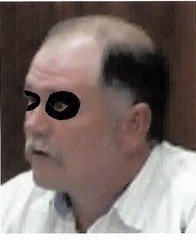
In a report in the Daily Times on May 12, 2006, Timothy Loper was quoted as saying about being mayor of Portsmouth, “There’s a lot of businessmen who wanted to back me this time for it. But I didn't think I had the education for it, and I didn't have the knowledge. But after seeing the ones that are running the city, I think I'm just as knowledgeable as anyone else.”

After years of frustration and failure, after years of working off and on at menial jobs, most recently pumping gas for minimum wage levels, after enough DUI’s to earn him a jail sentence, Timothy Loper discovered the key to success, at least in Portsmouth. He learned from the examples of past mayor Greg Bauer and current mayor Jim Kalb, as well as from his own futile career, that when you fail at your calling, whether it be in graphics (Bauer Graphics), groceries (Kroger’s), or pumping gas (Bi-Lo), there is one last chance for insignificant failures willing to sell their soul: get into politics.

And what is the prize jewel, the gold ring, the top of heap of local politics? What in Portsmouth is worth a chronic failure selling his soul for? It is not acquiring absolute knowledge, as it was for Faust. It is not beating the New York Yankees, as it was for Joe Hardy in Damn Yankees. No, for Loper, the impossible dream, the summit of success, the Mt. Everest of Scioto County, was none of these. His dream is being mayor of Portsmouth.

Loper doesn’t need talent, intelligence, or education to be mayor of Portsmouth. He just needed to learn how the system worked, and as a member of the city council he learned that. “I think I'm just as knowledgeable as anyone else,” he told the Daily Times, and he is. He learned how to betray the Concerned Citizens who had made his election to the city council possible. With the advice of the solicitous City Solicitor, he learned how to lie about in which ward he was really living. From the boorish councilman Marty Mohr, he learned how to skip those council meetings where he might have to answer to the public for his lies and his deceit.

As a councilman, Loper learned, above all, just who controls Portsmouth economically and politically. He learned who on the Chamber of Commerce and the Southern Ohio Growth Partnership calls the shots. He learned who the businessmen and lawyers who control the city are, and he made it clear he was prepared to do their bidding. And they led him to believe that if he continued to do what they wanted, he might someday be mayor. “There's a lot of businessmen who wanted to back me this time for it,” he told the Daily Times.

Supplying the Lute

Among the businessmen who are backing Loper is Chris Lute, who owns Lute Plumbing Supply, located within yards from where Loper pumps gas at Bi-Lo and not far from Ted Journey’s chop-shop, on Fourth Street. An internet site reports that in “June 1992, the Department of Labor (DOL) came down hard on Chris Lute, president of Portsmouth, Ohio-based Lute Plumbing Supply Inc. A DOL investigation found the wholesaler in violation of the Fair Labor Standards Act of 1938 (FLSA), which, among other things, requires employers to pay hourly employees minimum wage plus time and a half for overtime.” The DOL fined Lute $40,000 for back wages. Lute complained, “Having to pay our salespeople an hourly wage keeps us from being creative. It prevents us from doing things to motivate our employees.” In Lute’s view, a mimimum wage was not only uncreative – it was unAmerican. What workers need is more incentive, not a mimimum wage. But a mimimum wage is just what unskilled workers like Loper need to provide them a subsistence living. And Lute was opposed to it.

When Loper became a city councilman, Lute (I have been told) became far more solicitous about Loper’s wellbeing. Just who among Portsmouth’s philanthropic citizens is helping Loper remodel the Journeys’ 519 Third St. house is a trade secret now, but it would not surprise me if Lute was among those who supplied Loper with, if not the loot, at least the materials for the renovations.

Our local businessmen preach initiative and enterprise for workers, but when it comes to getting millions of dollars in various forms of assistance from all levels of government these businessmen do not practice what they preach. For them, there is no stigma attached to welfare provided it is corporate welfare. Pork is bad for minimum-wage underdogs but just fine for fat cats.

And when it comes to financially assisting local politicians, and mayors in particular, local businessmen can be very creative. Whether the mayor is a Republican or Democrat failure doesn’t make much difference. Local developer Neal Hatcher is willing to support a Republican or a Democratic mayor, just as long as the mayor allows Hatcher to raze hell. If Loper ever is elected, he will not forget those businessmen who urged him to run for mayor and without whose financial support he would have had about as much chance of becoming mayor as a minimum wage-earner would have of becoming as rich as Chris Lute.

Most people in elected office in city government are indirectly employed by the businessmen of Portsmouth. They are not paid by the hour and there is no minimum wage. There is nothing, to rework Lute’s language, that prevents the employers of Portsmouth from doing things to motivate their employees, the public officials they helped get elected. The over-privileged of Portsmouth who did not give a rat’s ass about Tim Loper when he was an unemployed unskilled laborer, who would have thought him a lazy drunken lout undeserving of welfare or food stamps, now want him to be mayor, if we can believe what Loper is now claiming, which is a big if.
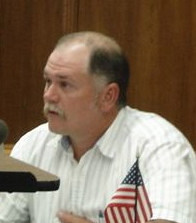
As a politician, Loper is the missing link between Portsmouth’s encarcerated and unencarcerated businessmen, between Portsmouth’s indicted and unindicted entrepreneurs. The Journeys are, like the Hatchers and the Claytons (Johnson and George), businessmen. But they are more than that: they are entrepreneurs. They are following their American dream. They are not satisfied with working for wages, minimum or otherwise. The Journeys differ from the “respectable” businessmen of Portsmouth only in this respect: the Journeys lack the education, contacts, and skills that would enable them as businessmen to control those who make and enforce the laws. The Journeys lack the clout and the millions that would enable them to operate unethically as businessmen within the law. The Journeys don’t have the pull that would enable them to get millions of dollars of pork from the U.S. Dept. of Agriculture the way the SOGP does. The Journeys have to bring home the bacon the old-fashion way: they have to steal it. They don’t have politicians and lawyers doing it for them.

So the Journeys chose to conduct their business outside the law, dealing in stolen vehicles and drugs. And when they were busted, it was not the Portsmouth police department who took the initiative, because Chief Horner’s chief concern is with “domestic terrorists” represented by the Concerned Citizens of Portsmouth and Scioto County, which I admit to being a member of.

Loper accused the Concerned Citizens of driving him from the city council. He said the Concerned Citizens were opposed to him because he would not vote against the purchase of the Marting’s building. Loper said the Concerned Citizens’ pressure on him was the same as if he was being bribed. Loper also claimed that not being allowed to vote in the First Ward in the May 2nd primary was like “being raped.” When and if Loper is raped or bribed, it will not be by the Concerned Citizens.

When it comes to murder, rape, bribery, and lying, no one has anything to teach the Lopers. If the SOGP ever succeeds in getting Loper elected mayor, they will have finally got the politician equal to their own perfidy. Pumping gas at Bi-Lo, Loper is within a minute’s walk of Lute’s Plumbing, Journey’s chopshop, and the SOGP headquarters, in the Welcome Center.

If Loper is ever mayor, we will have the missing link between the indicted and the unindicted criminals of Portsmouth, between the Journeys and the gents in the SOGP. Loper is living proof of the link between the criminals at the chopshop and the criminals in the Municipal building and the Welcome Center.

Saturday, May 06, 2006

Malpractice

malpractice

One of the first things I was warned when I traveled in Africa on behalf of the U.S. State Dept. in the 1970s was “Don’t drink the water.” When I moved to Portsmouth in 1989, which in some respects resembled a third world country, one of the first warnings I got was “Don’t trust the doctors.” Most of the doctors were associated with the Southern Ohio Medical Center, or SOMC. I didn’t take that warning seriously enough and I paid the price, as so many others I have known or heard about did. While there were many dedicated and talented people working at the hospital, for too many patients SOMC came to stand for Southern Ohio Malpractice Chopshop. The problem was not with the employees as much as it was the systemic cronyism, incompetence, and corruption among the over-privileged at the top.

At a dead-end on Fourth Street, in Portsmouth, we had Ted Journey practicing his chop-shop trade; on the Hilltop, where SOMC is located, we had Dr. Richard C. Rooney practicing his. According to the Shawnee Sentinel, Rooney still has ties to SOMC.

Thoracic surgeon Rooney was one of the doctors who gave SOMC a bad name. Back in 2000, I had heard that Rooney was in difficulties at SOMC. After being charged in a number of malpractice suits (see Rooney’s rap sheet, below) he had moved out of Portsmouth. That meant his house on Camelot Drive was empty. Selling a house in Portsmouth under any circumstances is not easy. In legal difficulties and having had to move out of town, Rooney was not in a good bargaining position when it came to selling his Camelot Drive house. If this was any place other than Portsmouth, he would probably have had to take a loss. But this is not any place; this is Portsmouth, and whenever the over-privileged and well-connected have property they need to unload, and when a private buyer cannot be found, public monies can be found.
In Portsmouth’s lexicon, “marting” means “to purchase, at inflated prices, with public monies, white elephant properties from the politically well connected.” In this case, a malpracticing doctor, a member of the over-privileged class, needed some help from his over-privileged peers.

Camelot
Former Rooney house on Camelot

Rooney’s case was not unlike that of Clive Veri, president of Shawnee State University. Rumors of legal problems and harassment suits were swirling around Veri when he resigned as president in 1998. He had become an embarrassment at SSU., where an overwhelming majority of the faculty had more than once voted no confidence in him. In one poll he got only 5% of the faculty to support him. SSU was near the bottom in US News annual college rankings. But the worse things got at SSU, the more the university trustees loved the malpracticing president. A piece I wrote in 1998 for the Shawnee Sentinel, in its pre-Internet, pre-cyberspace days, analyzed the sweetheart golden-parachute retirement package the trustees provided to the departing president.

Like Veri, Rooney was rescued by the SSU trustees. For over a year, I served as the faculty representative on a presidential housing a committee, of which SSU trustee George Clayton was chairman. We had been making plans to build a new house for the university president on the campus. The architect had been hired, the plans drawn up, and the ground all but broken. The architect had been encouraged by the committee to be innovative, and he had succeeded.
The house would have been an architectural landmark. But at the twelfth hour, George Clayton picked a quarrel with the young architect. I can think of no better way to describe it. I was flabbergasted. The architect was stunned. What was going on?

hasahouse
The house that Clayton killed

The next thing the committee knew, the project was canceled. Instead of building a state-of-the-art president’s house on campus, as had been planned, Clayton, acting for the trustees, decided instead to buy Dr. Rooney’s house on Camelot Drive. Rooney’s house had nothing to recommend it as a president’s house. The Camelot house was far from campus, was in need of extensive and costly redecoration and repairs, and was without adequate parking. Among other problems, it was slipping off the hill it was on. A retaining wall had to be reinforced. But the house was owned by one of the privileged elite and that was enough to recommend it. Why waste public funds on something new when something old (and empty) weighed heavily on the hands of one of the over-privileged?

George Clayton “negotiated” the outrageous price of $412,000 for Rooney’s house. What did Clayton care? It was taxpayers’ money, not his own that he was squandering. The Camelot house has since proved to be a money pit. If ever a SSU trustee deserved to be sued for malpractice, Clayton did.

In addition to having been on the board of trustees at the university, Clayton had also been on the board of directors at the hospital. There were few pork pies in Portsmouth he did not have his finger in. When his own business failed, he was stuck with an empty department store. He knew what to do. With Representative Rob Portman’s help (“It’s a bird! It’s a plane! No, it’s Porkman!”), Clayton unloaded his empty unsellable empty department store on the public. Millions of public dollars, much of it in the form of pork from the U.S. Dept. of Agriculture, have gone into buying and converting Clayton’s Kenrick’s department store into a Welcome Center.

martingno
Just say no to Marting's

Another empty department store, Marting’s, was also earmarked for conversion into a public building, at great public expense. But the voters refused to be hornswoggled, for Marting’s was the scam that broke the taxpayers’ back. In 2004, voters recalled a crooked mayor and two crooked council women because of their roles in the Marting scam, and just last week, in the May 2nd primary, the voters again rejected the Marting’s referendum. Marting’s is the scam that will never be depicted on the floodwall murals, but it is the scam that brought the Concerned Citizens into being, and for that all who want good government should be thankful.

The monopoly on news in Portsmouth has been broken. There was a time when an insert in the Portsmouth Daily Times and the Community Common was enough to influence voters to support the over-privileged. A closed open forum and a farcical open house at Marting’s was at one time all it would have taken. But inserts in support of the Marting scam were not enough in 2004 and they were not enough in 2006.

The defeat of the Marting scam
in the May 2nd primary was not the only victory for good government. Just as patients can sue malpracticing physicians, voters can still recall malpracticing politicians. The attempt to restrict the voters’ right to recall incompetent and corrupt officials was soundly defeated. We are not about to let the city solicitor decide which malpracticing politician is recallable. Not in a Kuhn’s age.

Rooney’s Rap Sheet

rooneyapsheet


Sunday, April 30, 2006

Ohio: The Blackeye State


Solicitor David Kuhn
kuhnblackeye


Councilman Tim Loper


Ohio proudly calls itself the Buckeye State, but since 2000 Ohio has gained another more shameful reputation. As a result of widespread election fraud, Ohio now could be called the Blackeye State.

The electoral blackeye given to Ohio at the state level by Secretary of State Kenneth Blackwell and in Portsmouth by City Solicitor David Kuhn is not going to be improved by the Loper case, which I have written about before but which I have to write about again because it gets more convoluted and unbelievable with each passing week.

On April 28, 2006, Portsmouth Daily Times reporter Jeff Barron wrote, “Just when it looked like the residency status of Portsmouth City Councilman Tim Loper couldn't get any more confusing, it did.” Loper’s status is confusing only because City Solicitor David Kuhn, who has been advising Loper at every stage, has made it confusing, either because he can not understand the city charter and the state statutes, or because he is willfully misinterpreting them. With Kuhn, the question is whether he is more ethically or more intellectually challenged.

Timothy Loper and his wife Teresa were residents of Ward One in Portsmouth, where they lived for a number of years at 114 Madison St. A high school dropout, Loper made a sporadic living as a laborer. He had trouble paying bills and creditors brought him into court more than once. He also had a record of arrests for driving under the influence, for which he received a suspended jail sentence. In an interview with me in 2004, he complained about the lack of job opportunities in Portsmouth and about the city’s purchase of the Marting building.

Prior to 2004, Loper had no experience in politics. But in that year, prompted by the Marting scandal, or by his realization that an opportunity to get ahead had finally presented itself, he became involved in the recall movement. The city in 2002 had purchased the empty Marting’s department store from the Marting Foundation for almost $2 million, a sale that was later ruled invalid by Common Pleas judge Marshall. One of the city officials responsible for the purchase of the Marting building was city council woman Ann Sydnor, who represented Ward One. In June 2004, Loper ran against her in a special recall election and won by a slim margin. Feelings against her and other city officials ran high in Portsmouth. Almost immediately after being elected to the city council, Loper, the former reform candidate, turned into a supporter of the status quo. He supported repurchasing the Marting building and converting it into a new city building. On Marting’s and other issues, Loper showed he was in the pocket of the powers-that-be and that his running as a reformer had simply been the most convenient way to put himself in a position to sell himself to the over-privileged, who control the city.

But he did not know how to close the sale. Just because someone is willing to sell his soul at a devil's auction doesn’t mean the devil knows about all his debts. Even after he was elected, Loper’s finances were going from bad to worse. As a result of unpaid taxes and a failure to keep up with mortgage payments on his Madison St. house, a sheriff’s auction was held on August 17, 2004. Although Loper would later claim he moved out of Ward One in October, according to eye witnesses, neighbors, and sheriff’s records, 114 Madison was unoccupied the day it was sold, August 17, so just where Loper was living in Ward One until October he has not made clear. But even if he lived in Ward One until October, he moved out before the November 8, 2005 election.

At around the time Loper’s Madison St. house was sold at auction in August 2005, he and his wife moved to Pleasant St., in Ward Six. According to the city charter, when he moved to Ward Six, Loper lost his right to vote in Ward One. He not only lost his right to vote in Ward One, he also lost his right to continue to represent Ward One on the city council, because the charter states a councilman must live in the ward he represents.

Furthermore, and most importantly, when Loper moved out of Ward One, he lost any legal right to run for the Ward One seat in the November 8, 2005, election. But City Solicitor David Kuhn failed to make it clear that Loper had lost his voting rights in Ward One; Kuhn failed to make it clear Loper could not continue to represent Ward One on the city council; and Kuhn failed to make it clear that Loper could not run for the Ward One seat in the November election. What Kuhn did instead was to advise Loper how he could continue to vote in Ward One, how he could continue to represent Ward One on the city council, and how he could run for Ward One seat in the November election. Kuhn based his bad advice on a misreading of a state statute that says if an elected official temporarily moves out of the district that elected him but intends to return to his primary residence, then that district remains his legal residence. But Loper did not maintain his primary residence; 114 Madison was sold in August 2005. His subsequent attempt to claim that 519 ½ Third St. was his primary residence was an obvious attempt to remain qualified to continue to vote and run for office in Ward One.

A Kuhn's Age

As was shown in his sworn testimony at the Board of Elections hearing, neither Loper or his wife had ever lived in 519 ½ Third St. Even if Loper divorces his wife and moves back to Ward One, at 519 ½ Third St. or elsewhere, that does not change the fact that he was not living in Ward One when he was elected to the city council in Nov. 2005. Moving back to Ward One in 2006 does not retroactively change Loper's status in the fall of 2005. That was then, this is now, and the two are not the same, not even in a Kuhn's age.

Loper claimed that he rented 519 ½ Third St. as his primary residence from ex-convict, Ted Journey, although Journey was later quoted as saying he rented 519 ½ to Loper as an office, not a residence. Kuhn conducted an investigation, talked to Ted Journey (before Journey was arrested yet again, for running a one-stop chop and drug shop in Ward One) and concluded that 519 ½ Third was Loper’s legal residence. Kuhn continued to insist 519 ½ Third was Loper’s legal residence even after the Scioto County Board of Elections, which is made up of Democratic and Republican members, voted unanimously recently that Loper had lost his voting rights in Ward One when he moved to Ward Six.

On a couple of occasions, Loper has shown signs of common sense. After the Board of Election’s ruled against him, he came up to me afterwards and shook my hand, thanking me for filing my challenge. He seemed relieved that he no longer had to go on pretending that 519 ½ Third was his legal residence. His wife was probably even happier. He said after the Board hearing that he thinks his election in 2005 was invalid and should be held again. He would like to run again, presumably without Kuhn’s bad advice. But Kuhn continues to advise Loper badly and has persuaded him to continue maintaining the lie that 519 ½ Third is where he lives even though he is living with his wife in Ward Six. Kuhn has turned Loper’s personal as well as his political life into a farce. He has made a fool of Loper, which unfortunately is not too hard to do. Loper’s most recent claim that he is separated from his wife politically but not romantically, that she lives in Ward Six but that he lives in Ward One is like that Abbott and Costello routine, only it’s which Loper lives politically in Ward One and which Loper lives romantically in Ward Six?

Perhaps Loper readily allows himself to be manipulated by Kuhn because someone is now willing to assist him financially with renovating 519 Third St., which continues to be owned by the indicted Journey. Loper appears finally to be getting a payoff for his selling out, but just who is going to collect it? Journey's 519 Third St. house is turning into a money pit, but where is the money coming from and into whose pockets is it going?

Kuhn’s wrongheaded insistence that Loper legally holds Ward One residency has confounded observers, who cannot believe the city solicitor can be so dense. It is not so much that Kuhn is dense; it is that he is desperate, desperate because what the decision by Scioto County Board of Elections effectively means is not just that Loper had no right to vote in Ward One on Nov. 8, 2005: he also had no right to run for city council from Ward One on Nov. 8, 2005. When the courts eventually rule that the election for city council in Ward One in 2005 was invalid, Kuhn will be exposed as the incompetent and unethical city solicitor that many of us in Ward One have unhappily discovered him to be. What Kuhn and Loper have given Portsmouth and Ohio is not one, not two, but four black eyes. That's what happens in a Kuhn's Age.


Sunday, April 23, 2006

Marting's: Portsmouth's Potemkin

bauman
Howard Baughman:
Caveat Emptor


“I thought we were talking about a wood-framed building. We're not. We're talking about a concrete structure.”
Mayor Kalb, quoted in the Portsmouth Daily Times, 4/22/06, on why he changed his mind about the Marting building.

Let me see if I’ve got this straight. Mayor Kalb wants the city to move out of the Municipal Building because it’s falling down. Howard Baughman, now president of the Portsmouth City Council, testified that the reason the council rushed through the purchase of the Marting building, in 2002, was not because they were trying to pull a fast one on the public but because it was dangerous for city employees to work a day longer in the Municipal building. To quote his testimony in court, “it is important to get out of the building we’re now in because it’s unsafe and it’s not healthy for the workers that work there. And I believe it was important for that reason to do it as quickly as possible.”

As Mayor Kalb told myopic Times reporter Jeff Barron, as quoted above, the reason he was initially opposed to purchasing the Marting building was because he thought its frame was wood. If the mayor sounds like a doofus when it comes to structural engineering, remember his only previous experience was as produce manager at Kroger’s. You can’t expect somebody who knows a lot about celery and lettuce to also know the fine points of wooden and concrete structures.

Concrete Evidence

But wait a minute. If concrete is so good, how come the Municipal building is falling down? It’s not that old, compared to the Marting building. The Municipal building was built in 1934. The Marting building was built in 1883. That makes the Marting building 51 years older than the Municipal building. The concrete in the Marting building is 51 years older than the concrete in the Municipal building. Concrete technology had come a long way in the half century between 1883 and 1934. 1883 concrete was primitive compared to 1934 concrete. In fact, "concrete" may be a misnomer for the structure of the Marting building.
Structural engineers had learned how to strengthen poured concrete, to reinforce it and make it more resilient. But 1883 predates poured concrete; the foundation of the Marting building is brick and mortar, not poured concrete.

marting's chink

The photo above shows what's behind the walls in the interior of Marting's. The foundation of the building is brick and mortar, rather than poured concrete. This is what the "foundation" of the 124-year-old building looks like. This is what is behind the Potemkin facade of the Marting building. The moldy, unbreathable air around the brick and mortar foundation smells like it is 124 years old. An Egyptologist, who explores inside pyramids, not a structural engineer, is what Marting's needs. That this is the kind of foundation city officials want to construct a city building on, at a cost of many millions of taxpayer dollars, shows how ignorant they are of the past and how little regard they have for the future.

martting
Marting's: Portsmouth's Potemkin Village

So how come the concrete Municipal building is allegedly falling down, and how come the Portsmouth U.S. Post office, which was built in 1935, just a year after the Municipal building, and in the same architectural style and with similar materials and technology, is not falling down? The answer is the federal government has kept up with the maintenance on the post office, while the city government has not kept up with the maintenance of the Municipal building.

The Municipal building is in poor condition because the city government has been neglecting it for some time. City officials deliberately let the building run down, and they frequently complained how dangerous it is. Why? For two reasons: first, it is no secret that a local developer is interested in building what he hopes will be a gambling casino on the site; and second allowing the building to deteriorate puts more pressure on the public to accept Marting’s as the “new” city building.

municbld
Municipal building: Future casino site?

Portsmouth’s culture of corruption, not structural engineering, provides the answer to why converting a 124-year-old department store is preferable to repairing a 72-year-old city building that was built as a city building. Just as facades have been used to hide the real age and condition of the Marting building, politicians who serve the interests of the Portsmouth Chamber of Commerce and the Southern Ohio Growth Partnership, have erected other kinds of facades to hide the truth from the public.

Phantom Shoppers

The Marting building is a geriatric structure. It has had several face-lifts, but it is a very old building. The only reason it is on the verge of being converted, at great public expense, into a public building, is that an influential family, the Martings, and a clever lawyer, Clayton Johnson, who is married to a Marting relative, concocted a scheme to unload a worthless piece of retail property off on somebody else. First, they tried to unload it as a piece of retail property when everybody knew downtown Portsmouth had become a retail graveyard. To fool one prospective buyer, whom they stupidly assumed was even dumber than they were, Marting’s and city officials tried to make Marting’s look like a thriving business by having cars driving up and down Chillicothe St., and having shills with Marting’s shopping bags walking in and out of the department store. Instead of being ashamed of such deceitful and dishonest practices, those who perpetrated them have been bragging privately for several years. At the now notorious closed forum at the Welcome Center, on April 18th, Portsmouth City Council president Baughman proudly recalled the scam campaign of fake traffic and bogus shoppers that he had helped create. Teresa Mollette’s website has a video clip of Baughman’s boasting. “We had phantom shoppers, phantom drivers all the time he [the sucker] was here.” Should we be surprised that Portsmouth cannot attract new businesses when we have morally and intellectually challenged politicians like Baughman in charge of our economic future?

In amnesia-like testimony in common pleas court, Baughman was at least able to remember what his occupation was. When asked his employment history, he replied, “Basically, sales all my life.” He testified he was currently employed at Covert’s Furniture Store. Given his shameful role in the entire Marting mess, of his lying and deceitfulness, a sign should be posted in the window of Covert’s: “Caviat Emptor.” Let the Buyer Beware. If the public allows Baughman and his relative Clayton Johnson to get away with the Marting scam, they will have nobody to blame but themselves.

Village Idiot

Having failed to hoodwink somebody in the retail trade into buying Marting’s, Clayton Johnson, Baughman, and other city officials came up with a scheme to unload the building off on the public. Just as bogus “customers” walked and drove up Chillicothe St. to deceive a private buyer, politicians posing as public servants are appearing at so-called open and impartial forums to present the so-called “facts” about the Marting’s building. Marting’s and city officials are holding an open house at Marting’s today, April 23rd, and they are lying in their teeth claiming that they are acting impartially and just trying to present the facts to the public. In a famous if fictitious incident in imperial Russia, a local official named Potemkin, by means of phony building façades, created a phony village to impress the visiting empress. Council president Baughman is Portsmouth’s Potemkin, and the Marting’s building, with its several façades and its bogus shoppers, is Portsmouth’s Potemkin village. And what is Mayor Kalb? Have I mentioned village idiot?

They tore down the N&W, a treasure of rail,
To make way for a county jail!
Why, they’d tear down the Taj Mahal
If Hatcher wanted it for a mall.

Friday, April 21, 2006

Welcome Center

Welcomectr


On 18 April 2006, President Bush appointed our former congressman Rob Portman to be the new head of Office of Management and Budget. Like Jimmy Dean sausages, Rob Portman is a product of Cincinnati, a city whose history is steeped in pork, a city whose nickname is Porkopolis. Appointing Portman, whose Portsmouth nickname is “Rob Porkman,” to head the Budget Office is like appointing Rush Limbaugh the Drug Czar or William Bennett the director of Gamblers Anonymous.

Portman_Superman
"It's a bird! It's a plane! No, it's Porkman!"


In a campaign stop in Portsmouth in September 2004, with Portman by his side, President Bush brought up the subject of the Visitor Center, or what was named the Welcome Center. Bush told a carefully screened audience that Portman had modestly urged him to mention the Welcome Center and take credit for it. But Bush told Portman, “Wait a minute, you did all the heavy lifting.” Always seeking to validate his macho credentials, Bush was casting a buddy he admires as a weightlifter. But Portman’s macho credentials were earned in kayaking. Mild mannered porktician by day, when Portman slips not into a phone booth but a kayak, he becomes Steve Canyon and Superman Marvel wrapped in one. In his younger days, he kayaked down the Rio Grande River and reportedly was the first westerner ever to paddle down the China’s Yangtze River. As a congressman, he kept a kayak in his office for those rare breaks from porking when he could slip away and paddle in the congressional pool.

On the same day Bush put Portman in charge of the budget, the Portsmouth Chamber of Commerce held a forum at the Scioto County Welcome Center, a facility that would never have come into existence without the help of Portman, who steered U.S. Dept. of Agriculture pork its way. Portman is a political miracle maker who, with the waving of a magic bureaucratic wand, helped turn the urban-industrialized city of Portsmouth into a rural area that qualified for Dept. of Agriculture pork. To see the Portman-Portsmouth-Pork connection, check out the conservative blog Porkopolis: Rants on Pork-Barrel Spending. The Welcome Center is the Southern Ohio Growth Partnership’s new city hall. The Welcome Center, not the Portsmouth Municipal building, is where the important decisions will be made by the city’s unelected power brokers.

The Welcome Center should be called the Rob Portman Center. He personally delivered from Cincinnati to Portsmouth the government check that would turn out to be just a down payment on millions of pork dollars that would find their way into the Welcome Center. Portman could have mailed the check, but in an election season he wanted to be seen as the politician who was bringing home the bacon. He was not embarrassed at being the photogenic poster boy of pork, as the Superhero Republican politician who routinely spends millions of government dollars, rather than as an entrepreneur who creates jobs and generates profits in the private sector. Having worked in the private sector only briefly, and then as a lawyer, Portman knows much better how to spend the public’s money than to make his own. His wealth he inherited from his family’s business. Having impersonated Senator John Edwards and earlier Joseph Lieberman in mock presidential debates, Portman may now think he’s a Democrat. If he ever leaves politics, the 50-year-old Portman may become a lobbyist, as he was for a time in the administration of the senior Bush. But others see him as a candidate one day for governor of Ohio or president of the United States.

Because of the book-cooking that customarily covers up the true cost of pork projects in Portsmouth, it may be some time before we know exactly how many millions of pork dollars have gone into the Welcome Center. My requests for information have been ignored. I have been told by people in a better position to know than me that millions of public dollars have ended up in the Welcome Center, some of which was supposed to go for the underprivileged black youth of Portsmouth. Instead it went to over-privileged over-the-hill whites who dominate the Southern Ohio Growth Partnership. There is an adage, “Youth must be served,” but in Portsmouth we say, “The over-privileged must be served.” If the over-privileged have an empty house or department store on their hands, or if they need a bank loan or sweetheart appraisal or an abatement, or a new clubhouse, the over-privileged know who to call – the SOGP.

By observing how the pork game is played nationally and globally, Portsmouth’s police chief has learned how to play the pork game in Portsmouth. He tries to frighten citizens into voting for new taxes by citing statistics that show Portsmouth is one of the most crime-ridden communities in the nation. Of course, he doesn’t take any responsibility for Portsmouth’s high crime rate, blaming it on out-of-town drug dealers who don’t think twice, as he likes to say publicly, about shooting police in the head. From what I’ve heard, the thugs who shot the Melchers in the head had Portsmouth family ties. And Ted Journey, who was operating a one-stop oxycontin chop-shop within a couple of minutes walking distance of the police station and a one minute walk from the Welcome Center, is a local boy who had previously served a prison term for an automobile insurance scam. How long would his West End Auto have continued as a bee-hive of criminality if law enforcement agencies from other communities hadn’t blown the whistle?

The report in the Portsmouth Daily Times on the forum at the Welcome Center began, “Amid tight police security, the Portsmouth Area Chamber of Commerce on Tuesday presented a forum at the Scioto County Welcome Center on several issues facing voters on May 2.” The reporter, Jeff Barron, did not explain why there was “tight police security.” He didn’t need to, because the Daily Times had previously helped publicize Chief Horner’s incredible claim that the city government was threatened by a group of local “domestic terrorists.” Those so-called domestic terrorists were the excuse Horner used to impose tight security at the Welcome Center the night of the closed forum.

Hornermobile
Hornermobile outside Welcome Center

Who are these domestic terrorists Horner has warned us against and who he was on high alert for at the Welcome Center on May 2? They’re us, that’s who, a couple of dozen people who have formed an organization called the Concerned Citizens of Portsmouth and Scioto County, or Concerned Citizens, for short. A disproportionate number of the Concerned Citizens are senior citizens. The average age of the president, the vice president (yours truly), and the treasurer of the Concerned Citizens is 70. This is not an organization supported by a foreign government; this is an organization supported by the U.S. government in the form of Medicare. Before resigning for reasons of health, the founding president of Concerned Citizens chaired meetings with a portable oxygen tank at his side. A number of senior Concerned Citizens have recently undergone surgery. There are as many hearing aids, canes, and sprained backs at a typical Concerned Citizens meeting as there are at a Hill View Christmas party. These are sexagenarians and septuagenarians whom the police chief has labeled domestic terrorists. These are the people he used as an excuse to impose the kind of security on the Welcome Center that you might expect at a meeting of the World Bank in a third world country. At Horner’s direction, the police would not let the Concerned Citizens distribute literature at the Welcome Center, claiming that it was private property. Private property? Had Superhero Rob Porkman worked a miracle? Had he turned pork into gold? Had he privatized the Welcome Center?

The connection between Portman and the Welcome Center, and between Portman and the closed forum that was held in the Welcome Center, offers insights into the changes that have taken place in the Republican Party in the last quarter century: the party of entrepreneurs has become the party of pork, the party of Free Enterprise has become the party of Free Lunch, the party of Lincoln and Eisenhower has become the party of Abramoff and Delay, or to make the Ohio connection, the party of Taft and Ney.

Portman may turn out to be the great white unindicted hope of the Republican Party. Looking up into the clear blue sky over the Welcome Center on April 18, I imagined him streaking across America, in charge of our national budget. Think of the miracles our Superhero can perform as budget director, turning the USA into one consolidated pork project, into one huge Welcome Center.

Wednesday, April 12, 2006

Unholy Triangle:

porttri


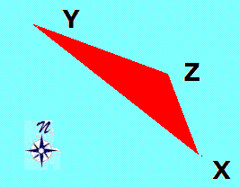
Portsmouth sometimes seems trapped in a vicious cycle of crime and corruption. At least one survey revealed that Portsmouth is the second most crime-ridden city in Ohio. The Columbus Dispatch identified Portsmouth as the drug capital of Southern Ohio. By looking closely, we can see that the vicious cycle is made up, in turn, of a number of unholy triangles, such as the one above.

X, Y, and Z, in this triangle, represent three disreputable Portsmouth structures located within less than a half mile of each other.

X = the Municipal Building
, which is located on Second St. and houses, among others, the office of the mayor, the chief of police, and the city solicitor, David Kuhn, who has ruled that Timothy Loper had the right to run for and serve as the councilman of the First Ward, even though Loper had moved out of the First Ward after the sheriff, on 17 August 2005, auctioned off Loper’s Madison St. house for unpaid taxes.

When the Board of Elections ruled, on 5 April 2005, that Loper was not a legal resident of the First Ward, he announced contritely that he would resign from the city council. Since the city charter states council members must live in the ward they represent, he understood what the BOE decision obliged him to do. He has these rare fits of honesty that seem to surprise himself as much as anybody. Remember his declaration at a council meeting, in regard to the Marting building, that he had been played for a dummy long enough? Long enough? Oh, no, not nearly long enough. Like Pinocchio’s nose, Loper still had a long way to go. The day after he announced he would resign, Loper told a Daily Times reporter he would not give up his seat; he would appeal the BOE ruling. He was not done putting Portsmouth and his family through hell. He was not done listening to the likes of Marty Mohr and David Kuhn.

On Monday evening April 10 Loper showed up at the Municipal Building and took his seat in the council chambers, but following a point of order by Councilman Mollette, Kuhn, whose questionable legal opinions are causing havoc, Loper remains a member of the city council, pending his appeal. But Loper voting on any issue might have caused the results to be invalidated should Loper lose his appeal, as Mollette pointed out. Kuhn did not disagree with Mollette’s warning.

Presumably, Loper could have sat in his seat like a dummy, without taking part in the proceedings, or he might have taken a seat with the spectators, to keep abreast of what the council would do that evening, but he decided to leave. To protest the council’s reluctance to allow Loper to vote, Councilman Mohr asked to be excused. His request required four affirmative votes, but only three councilmen were in the affirmative. Mohr left anyway, like a sulking student striding out of a classroom. According to reporter Jeff Barron, as Mohr left, he said sarcastically to Councilman Mollette, “Good going, Bobby.” Mohr’s emotional development seems to lag behind his intellectual development. Intellectually, he has reached about the age of fifteen; emotionally, he’s about eleven. Instead of criticizing Mohr for his prepubescent behavior, and for his going AWOL, council president Baughman criticized those in the chamber who tittered at Mohr’s performance. But Mohr was not done. A ruckus reportedly occurred in the outside the Municipal Building when a cane wielding old codger supporter of Mohr’s berated Lee Scott. Council meetings have turned into a Three Stooges movie, with Mohr playing Moe.

municbld
Municipal Building

In part because the Municipal Building is located on land that could become valuable if legalized gambling comes to Portsmouth, the building has been allowed to deteriorate to justify tearing it down. We only have to compare the Municipal Building to the U.S. Post Office in Portsmouth, which was built about the same time and in the same style, to see what the Municipal Building might look like if it had not been persistently neglected.

Y = the West End Auto Shop,
which is less than ½ mile from the Municipal Building. On 22 March 2006, local and state law enforcement forces from Ohio and Kentucky, as well as from the FBI, raided West End Auto and found chop upped vehicles and drugs. Among those arrested was Loper’s landlord Ted Journey, the owner of West End Auto. Chief Horner was quoted in the media as saying the Portsmouth police had had the West End Auto under surveillance and were ready to pounce when other police agencies beat them to it. Perhaps if Chief Horner was not so devoted to harassing “domestic terrorists” and their subversive activities, such as trying to recall unpopular politicians, he would have been able to pounce earlier. On the May 2nd referendum, Horner is seeking an increase in taxes to make his losing war against drugs more high tech. But two old-fashioned, low-tech reliables, shoe leather and rubber tires, should have been enough for the chief to have long since eliminated the West End crime operation, which was going full-blast less than a half mile from the Municipal Building and police station.

West End Auto
West End Chop and Oxycontin Shop

Z = 519 and 519 ½ Third St.
In response to a formal challenge from Harald Daub, Kuhn conducted an investigation of Loper’s alleged First Ward residence on Third St. In the course of that investigation, Kuhn reported, he talked to Loper’s ex-convict landlord Ted Journey, who vouched for Loper but in a way that might have caused some other city solicitor to be suspicious. Journey said that Loper had rented 519 ½ Third St., an empty and unlivable former shoe repair shop, but as an “office,” not a residence. An office would not seem to qualify as a residence, but that is just one of the many holes in this unholy triangle that Kuhn did so much to help create. Kuhn is not so much a legal arbiter as an enabler. Willfully or dimly misinterpreting the Ohio Revised Code, Kuhn had ruled Loper was still a resident of the First Ward because it was Loper’s intention to return to his Third St. residence, which he claimed to be renovating at his own expense, in spite of having little money. But the Board of Elections ruled Loper had never lived at either 519 or 519 ½. Therefore. he could not be returning to live there, as state law required. You can’t return somewhere you have never been, except apparently in Portsmouth.

519 Third
519 Third St. Rear and side view


So X+Y+Z = Portsmouth's Bermuda triangle, where honesty, truth, and justice disappear, without a trace, like those chopped up vehicles at West End Auto.


Saturday, April 08, 2006

Let Me Lie in a House

housebyroad
The House by the Side of the Road


On April 5, 2006, responding to a formal challenge I had filed, the Scioto County Board of Elections determined that Timothy Loper had never lived at 519 or 519 ½ Third St. and voted unanimously to remove him from the list of qualified voters of the First Ward. City Solicitor David Kuhn, who appeared as a witness for Loper, had argued that though Loper had moved out of the First Ward, to Pleasant Ave., in the Sixth Ward, he intended to return, which Kuhn in his role as city solicitor had ruled was allowable by state law. Kuhn cited ORC 3503.02 (A), which states “That place shall be considered the residence of a person in which the person’s habitation is fixed and to which, whenever the person is absent, the person has the intention of returning.

What Kuhn failed to understand, or perhaps thought others might fail to understand, was that Loper’s fixed place of habitation in the First Ward was 114 Madison St., where he and his wife had lived for years. When that home was auctioned off by the sheriff on 17 August 2005, Loper and his wife lost their fixed place of habitation in the First Ward. The attempt by Loper to claim 519 or 519 ½ Third St. as his fixed place of habitation to which he intended to return was an obvious attempt to remain qualified to be councilman from the First Ward. But neither 519 or 519 ½ Third St. was ever his fixed place of habitation, so his declaration of his intention to return to it is a legal and logical absurdity. You can not return to live in a place you have never lived in.

519 1:2 3rd St
Loper Doesn't Lie Here Anymore

After the SCBE hearing, Loper announced contritely he would resign from the city council. Portsmouth Daily Times reporter Jeff Barron quoted Loper to that effect the next day, Thursday, 6 April 2005. But then the following day, Friday, 7 April 2005, Barron reported in the Daily Times that Loper had changed his mind and would not resign. Sounding peevish, Loper told Barron, “I'm not going to just walk away and let someone get appointed to Council.” No, not after all the lies and deception Loper had used to get the seat himself.

I believe Loper cannot resign from the city council. Just as he could not return to live in a house he had never lived in, he cannot resign from a city council that he was not legally a member of. The Nov. 2005 election for the First Ward seat was illegal because Loper was not a legal resident of the First Ward.

In those Nov. 2005 elections the state of Ohio gained national notoriety for “voting irregularities,” a euphemism for electoral fraud. We had our own little electoral “irregularities” down here in Portsmouth’s First Ward, where we suffer from constipated democracy. Portsmouth's irregularities can be traced not to Secretary of State Blackwell but to city solicitor Kuhn and to whomever else in city government is responsible for Loper’s name being on the ballot. The Scioto County Board of Elections determines who can vote. Somebody in the city government determines who can run for office. Let's not forget the case of Michael Malone.

The city should hold another election for the First Ward. I may be wrong, but there is not much likelihood of that happening with David Kuhn as city solicitor, for it was Kuhn whose flouting of the law made it possible for Loper to illegally run for and then illegally serve almost six months on the city council. Rather than chance an election, and who that might bring on to the city council, Kuhn will likely rule that the city council has the right to appoint Loper’s successor within thirty days, and if the council does not appoint someone, then Kuhn, city treasurer Williams, and council president Baughman will. The city charter calls for such a procedure, but it calls for it presumably for a legally elected council member. Loper’s residency and therefore his election were without legal foundation. Loper occupies his seat on the council illegally.

Steeped as Portsmouth is in corruption and criminality, who the hell cares whether Loper is on the city council illegally or not? City Solicitor Kuhn, City Clerk Aeh, and Chief Horner have more important things to do, like putting reform candidate Russell Cooper behind bars because (I think I am quoting Horner) of “a series of improprieties.

Members of the city council, who are trying to soak the taxpayers millions for the Marting building, will protest that having a special election for the First Ward will be a financial burden on the taxpayers. Jeff Barron will seek a comment from the adulterous Second Ward praying councilman David Malone, whom Barron regards as the voice of moral authority on the council. If Malone tells Barron we need cleaner streets, that is front-page news. Malone will probably tell Barron we must put an end to all this bickering over Loper and in the name of the Holy Spirit come together for the sake of the city. Perhaps Malone’s felonious brother Michael will make another appearance before the council to urge us not to criticize our city leaders, for without harmony there can be no “Prosperity for Portsmouth,” according to his Deeper Life philosophy.

As reported in the Daily Times on Friday, 7 April 2006, Loper realized, or somebody realized it for him, that his election to office in Nov. 2005 was illegal, so he has called for a new election. That is what Loper said on Friday, but what he might say on Saturday, Sunday, and, especially, on Monday, at the council meeting, may be something else.

I would not be surprised to see someone persuade him to resign so the council can handpick someone to their liking. But I hope Loper continues to call for a new election. I hope Kuhn realizes the political and financial costs of a new election will be less than the political and financial costs of a court case over the election. When Michael Malone came within one vote of becoming the Third Ward councilman, the city avoided a potential costly legal battle. Why had the city come so close to a costly legal battle? Apparently because Kuhn had not made it clear to Malone that as an ex-felon, he would probably not be able serve on the city council, even if he was elected.

Kuhn and those unelected privileged few who control the city will find the prospect of a court case involving Loper’s 2005 election to the city council unappealing. Loper’s landlord, whom Kuhn contacted prior to ruling Loper’s Third St. address legal, is Ted Journey, an ex-convict, who was arrested again a few weeks ago and charged with chopping up vehicles and dealing drugs at West End Auto, on Fourth St., in the First Ward. Imagine a court case in which Ted Journey, as Loper's landlord, might testify for Loper, as Kuhn did at the Board of Elections hearing.

At this point, it looks like it will be the city council who will appoint a new First Ward member. If the council does not act, then Kuhn & Co. will do the honors. They may even wait until November, when they could appoint Ann Sydnor, and we would be back where we were two years ago. The people of the First Ward should be allowed to elect a legal representative to the city council, but in our constipated democracy they will probably be denied that right.

Somebody has been pouring money into
to the Loper-Journey house of ill repute on Third St. in the last couple of weeks, probably in preparation for last Wednesday's Board of Election hearing. Since Loper is broke, where did the money for the installation for new windows come from? Somebody may have been investing in keeping Loper on council.

The Third St. house, or sty, reminds me of the of the poem “The House by Side of the Road,” a framed copy of which I picked up in a Maine antique barn years ago. Even further back than that, I went to an inspiring school in New Hampshire, where the house by the side of the road was located. I consider that school, that house, and that poem important influences on my development. It was perhaps the first and last time in my life that I found Christians who practiced what they preached.

I recall looking in the window of the house Samuel Walter Foss wrote the inspiring poem in, and now I have lived long enough to have looked through the dirty and broken windows (since replaced) of the Journey-Loper house on Third St. Could any two houses be more different! I will try to suggest those differences in the following doggerel:

LET ME LIE IN A HOUSE

Let me lie in a house by the side of the road,
When the pimps and the dealers go by;
Let me lie in a house on Third Street,
In the shade of Lute’s Supply;

Let me lie in the Municipal Building,
When political games are played;
Let me lie in the County Courthouse,
When voting challenges are made.

Let me lie in the
Daily Times building
When the journalistic prostitutes work;
Let me lie in the Visitors Center,
When the SOGP cuts up the pork.

Let me claim to live on Third Street,
But sleep each night on Pleasant,
Dreaming I'm First Ward councilman,
Lying to my heart’s content.

“It takes a heap of lying to make a house a home,” if I may misquote another poet, Robert Service.


Thursday, March 30, 2006

Who's Your Mummy?

mummy
124-Year-Old Maid

On May 2nd, the people of Portsmouth should VOTE NO on converting Marting’s department store into a city building because almost everything associated with the Marting deal has been fraudulent. The deal was put together secretly and illegally by Portsmouth lawyer and political boss Clayton Johnson. Judge Marshall invalidated the sale of the building to the city on the grounds that the way the sale was “negotiated” violated Ohio’s sunshine laws, but the new corrupt Mayor and city council turned around and apparently secretly worked out another deal with Johnson that made the city the owner of the Marting building once again.

The Marting building is like the Old Maid in the card game. In that game, the player who ends up with the Old Maid card (the last queen) loses the game. The one who ends up with the Marting building loses our game because the Marting building is virtually worthless. Back when he was still capable of being honest on the subject of the Marting building, councilman Marty Mohr told a Columbus Dispatch reporter (a reporter Clayton Johnson would not talk to), “It ain’t worth anything.” Mohr was right. It will take many millions of public dollars, far more than the Mayor is willing to admit, to convert this streetwalker of a building into a city hall, millions of dollars that would be better spent on a new state-of-the-art structure, built from the ground up, which is what taxpayers and those city employees who are honest deserve.

Mayor Kalb and the city council are trying to bail out Johnson and the Marting Foundation at the taxpayers’ expense. Count on it, the Portsmouth Daily Times, the Community Common, and station WNXT, and its SOGP motor-mouth Steve Hayes, will urge citizens to vote for the Marting fraud, just as they urged voters to keep Mayor Bauer in office. Mayor Bauer was thrown out of office because of the Marting fraud, and the Marting building never should have been repurchased by the city. But since the city has repurchased it, it would only be sending good money after bad to try to hide the indisputable fact that the Marting building is approaching its 124th (!) birthday, and that behind the faux-brick curtain wall that was added forty years ago is an Old Maid who should be allowed to die with dignity instead of being preserved, like a living mummy, at the cost of many millions of public funds.

I asked Mayor Kalb at a public meeting how old the Marting's building was, and he said he didn't know. No one is more committed than him to converting the building to a city hall, and he doesn't know, or seem to care, how old it is. Kalb appears to be brainwashed about Marting's, so it would not make any difference how old it is or how many millions the conversion is going to cost. His critics believe he really doesn't have a handle on finances generally, not just the cost of the Marting's deal. He may suffer from what could be called a lottery mentality. He would like to see gambling come to Portsmouth so he wouldn't have to drive over to Kentucky.

Marting40s
The above photo shows the 1883 Marting's building at 515 Chillicothe St. with the 1909 facade. The building at the extreme right became part of Marting's as it expanded. Photo appears to be late 1940s.

The original Marting building was built in 1883. Marting's subsequently expanded by acquiring the buildings north and west of it. I don’t know when those other buildings were erected, but they are about the same vintage as the original Marting’s building and might even be older. A new façade was added to those old buildings in 1909, which gave an appearance of architectural unity to buildings that originally had little in common, architecturally speaking. But that 1909 façade in no way strengthened the buildings: it just made them look a little less older, a little more elegant.

The year 1909 was engraved at the top of the original Marting building when the new façade was added. This led to the erroneous impression that there is only one Marting building and that it was erected in 1909. There were a couple of buildings, which were already a quarter of century old, hiding behind the 1909 façade. Then around 1964 what architects call a curtain wall was erected, covering up the 1909 façade.

So we have a curtain wall covering up a façade covering up a building. A curtain wall can be made of brick, steel, glass, a composite material. A curtain wall is not weight bearing; it does not support the building. Usually a curtain wall is for a decorative or cosmetic purpose, to change the appearance of a building or to hide its age or unattractive and run-down condition.

martting2
Marting's 2005: Portsmouth's Bad Dream

Who knows what architectural decay lurks behind the curtain wall of the Marting building? We don’t know what the Marting building looks like anymore than we know what Florida’s Katherine Harris looks like behind her notorious makeup. We don’t know because we can’t peek behind the pancake. Florida’s unhappy Republican Party appears to be stuck with Harris as its candidate for the U.S. Senate, and are Florida Republicans ever regretting it, as we will regret being stuck with the Marting building as our city building.

Phyllis Diller: As Many Facelifts as Marting's

What does the 1909 façade of the Marting building really look like forty years after the curtain wall was applied? The Hollywood star Rita Hayworth used to say that men went to bed with her and were surprised the next morning to wake up with Margarita Carmen Cansino (her real name.) With the Marting building, the city of Portsmouth may think it’s going to bed with Rita Hayworth, but it will wake up not with Margarita Carmen Cansino but with Phyllis Diller. If this latest renovation goes forward, the Marting building will have had as many facelifts as Diller: four, and counting.

The Marting fraud is so emblematic of Portsmouth’s problems: underhanded politicians and unscrupulous SOGP characters putting on a front, pretending to be virtuous and civic-minded, hiding behind the flag and the cross, treating the Marting building as a kind of shrine to Portsmouth’s romanticized past. Long after the last rich white trash has retired to Hilton Head, the people of Portsmouth will have to live with the Marting building, as though being married to a mummy.

We only have to view the Marting building from behind to know who or what we are going to bed with, and if we do end up with Marting’s we should not blame it on the pimps in the Municipal building just because they are the sleazy characters who hustled us. We have a chance on May 2 to VOTE NO to the prostitution of local government by VOTING NO on the Marting referendum.

MARTINGREAR
Marting building from rear: 2006

(For a complete time-line of the Marting's scam, go to Teresa Mollette's excellent website.)


Sunday, March 26, 2006

The First Commandment

Moses


The First Commandment of Portsmouth’s over-privileged is “Local government shall not construct a new public building when a doctor, lawyer or businessman has a worthless old building that can be turned into a public building at great public expense.

Here are five recent examples of the First Commandment at work:


Thatcher House
Thatcher house

(1) First Ward councilman John Thatcher and his wife, a former trustee of Shawnee State U., owned an unoccupied old house on Franklin Blvd that they had trouble selling in Portsmouth’s sluggish real estate market. The solution? They sold it, for much more than market value, to SSU as a “temporary” house for the SSU president. When the temporary president’s house was later sold, to a doctor, SSU and the tax-payers of Ohio took a $50,000 loss, not counting the furnishings and redecoration and the loss of taxes for the years the house was off the tax rolls.

Camelot Drive
Camelot

(2) A doctor had an unoccupied aging Camelot Drive house, with serious structural problems, which he was having trouble selling in Portsmouth’s chronically sluggish real estate market. The solution? He sold it to Shawnee State U. at an inflated price as the permanent home for the president of SSU, even though the house is far from campus, has inadequate parking space, requires large expenditures for repairs and refurbishing, and is unstably situated on the side of a hill down which it is inclined slowly to slip. The sale was “negotiated” by the chair of the SSU board of trustees, George Clayton.

Adelphia Building
adelphia
(3) Herbert Singer, an absentee landlord, living in Los Angeles, had an unoccupied building on Washington St., the former Adelphia building, on which he owed back taxes. The prospects of any business wanting to rent or buy that property were very remote. The solution? He got the city to accept the worthless Washington St. building as the next headquarters for the Portsmouth Police Dept. That way the absentee landlord in L.A. would not be responsible for real estate taxes, past and future, and he could claim a tax write off. Neil Hatcher, the absentee landlord’s agent, would get his cut. Chief Horner, always willing to play ball in a crooked game, readily agreed to this arrangement.

Welcome Center
Welcomectr

(4) George Clayton’s Kenrick’s catalogue store on Second St. went belly up when the Grant Bridge went down, and he was stuck with an old, empty building that he had no hope of renting or selling but still had to pay taxes on. The solution? With his political connections, he unloaded it on the county, which obtained it with pork provided by Rep. Rob Porkman and the Dept. of Agriculture. The building, on which millions have now been spent, is named The Welcome Center, but tourists complain it is seldom open and when it is it is unwelcoming. What it really is is the headquarters for the Southern Ohio Growth Partnership and the illegitimate and ugly architectural offspring of the marriage of pork and political corruption.

Marting Building
martting
(5) The Marting Foundation, a speciously philanthropic front for Portsmouth’s boss, Clayton Johnson, a cousin of George Clayton, had a large white elephant on its hand: the empty Marting building, a former department store, at the corner of Sixth and Chillicothe St. The problem is a familiar one in Portsmouth: the property is unsellable and unrentable but the taxes on it still have to be paid. “It ain’t worth anything,” as councilman Mohr told a reporter for the Columbus Dispatch. The solution? Get the city to buy it for nearly $2 million and convert the now 124-year-old department store into a municipal building. The city bought it, at the inflated price, but the sale was ruled invalid by the courts. Then the Marting Foundation arranged a fall-back deal whereby the city would keep possession of the building, provided the city met certain conditions laid down by the Foundation. Imagine a con artist dictating the terms under which he will return the money he has fraudulently obtained. Like the Old Maid in the card game, the Marting building is last thing the Foundation wanted to end up in its hands. If it gets approval in a special referendum that will take place on May 2, our corrupt city government plans to go ahead and convert the former department store to a municipal building.

What these five examples demonstrate is how Portsmouth’s over-privileged classes faithfully adhere to the First Commandment: “Local government shall not construct a new public building when a doctor, lawyer or businessman has a worthless old building that can be turned into a public building at great public expense.

Wednesday, March 22, 2006

Rich White Trash

Hatcher(2)


City of Portsmouth Ordinance 941.04, dealing with the “DISPOSAL OF REFUSE AND GARBAGE GENERALLY,states that “(a) No person, firm or corporation other than the Director of Service or his authorized
agent, who holds a lawful contract with this City shall collect, remove, transport or dispose of residential garbage and refuse within this City.
(b) It shall be unlawful for any person to dump or cause to be dumped any garbage, refuse, litter, junk, appliances, equipment, cans, bottles, paper, lumber, trees, limbs, brush, or parts thereof anywhere in the incorporated area of the City except as may be permitted by City ordinance or at the solid waste transfer station owned by the City.”

Portsmouth real estate developer and SOGP member Neal Hatcher has sunk, or dug, to a new low. His workmen were recently caught trying to bury trash at the corner of Fourth and Waller St. The trash, which was trucked in from some other location, didn’t look like poor trash. It looked like rich white trash, with discarded children’s toys – a cart, a bike, a football – and mystery trash in black plastic bags.

Fourth and Waller is the site of one of the many Shawnee State University dormitories Hatcher is building in what is called sarcastically “Hatcherville” by those residents who have not yet been driven out of the neighborhood. Those who have been driven out are said to have been “Hatchered.”

Joe Perry: Refuses to
be “Hatchered

joeperry

One of those residents of Hatcherville who has refused to be Hatchered is Joe Perry,
a young African-American property owner who refused to let Hatcher intimidate him. Perry’s aunt is the celebrated soprano Kathleen Battle, who has publicly come to his defense in his struggle against Hatcher’s bullying and bulldozing tactics. I chronicled her support of her nephew in a blog “Battle in the Fray.”

Hatcher has an ongoing risk-free sweetheart dormitory deal with Shawnee State University in which the state of Ohio takes most of the risk and Hatcher most of the profits. The public knew very little about the details of these sweetheart deals until I dug up public documents through the so-called Sunshine laws. I have written several blogs on Hatcher’s most-favored-developer status in our city.

Skullduggery

Don’t expect Portsmouth’s daily newspaper the Daily Times to dig up anything because it is the lap dog for the Southern Ohio Growth Partnership (SOGP). When it comes to writing dirt about Portsmouth’s rich white trash, the lips of Daily Times’ reporters are sealed. Its publisher is a member of the SOGP, which is a private corporation and therefore not subject to Sunshine laws. SOGP members are reportedly sworn to secrecy, like the Skull and Bones society at Yale, to which two rich boys, George H. W. Bush and John Kerry, belonged. Bush Jr. had to settle for Skull and Bonehead.
SCULLX
Speaking of which, if you drive through hollows in southern Ohio you will see that some of the poor whites who live in them have a simple solution about what to do with trash. They dump it into the nearest gully and when that fills up they move on to the next gully. Hatcher apparently thought his most-favored-developer status gave him the right to bury trash at the sites of his dormitories. He didn’t get away with burying trash on the corner of Fourth and Waller, however, because somebody in the neighborhood is reported to have made a phone call. Rather than risk prosecution and bad publicity (not in the Portsmouth Daily Times but in the Shawnee Sentinel), Hatcher is said to have come and ordered the trash removed.

The Hatcher trash incident can serve as a metaphor, because too much of local, state, and national government consists of covering up the illegal and unethical connections between business people and politicians, both of whom like to take cover behind flags and crosses. At the national level we have the widespread corruption resulting from the collusion between politicians and business lobbyists like Jack Abramof. At the state level, in Ohio, we have Representative Bob Ney facing indictment as the taker of Abramof’s bribes, and we have the exposure by the Toledo Blade of the coin-investment fraud perpetrated by a Republican fund-raiser with ties to Gov. Taft. In Portsmouth we have city government functioning as the tool of the SOGP, and we have venal university trustees and crooked city council members bailing out with public funds owners of distressed residential and commercial properties. A doctor’s house on Camelot Drive, far from the campus, with little parking space and with serious structural problems, was purchased as the official home of Shawnee State’s president. An empty department store on Second Street owned by one of Portsmouth’s over-privileged was converted with pork funds into a Welcome Center and a headquarters for the SOGP. And the empty 114 year-old Marting’s building will be converted at great public expense into Portsmouth’s “new” city hall unless the voters in May say no to a referendum that would give a go-ahead to the project.

Sunshine

One valuable tool the public uses to expose these real estate shenanigans are the so-called Sunshine laws, which enable private citizens to dig up documents that public officials would otherwise prefer never saw the light of day. Nobody dug deeper into the dirt than John Welton, aka Doug Deepe, who used the Sunshine laws to uncover levels of corruption and scandal that no one had plumbed before.

A nationwide Sunshine Week was held March 12-18. A Sunshine forum was held at Shawnee State University on March 13. Martin Susec, a representative from the state attorney general’s office, as well as state representative Todd Book, were part of the program. Councilman Bob Mollette and his wife Teresa were among those who were in attendance, because they have become leading proponents and users of the Sunshine laws. The Mollettes’ websites are devoted to making government transparent by making public documents available to researchers and bloggers.

It was Teresa Mollette who provided me with one of the photos Joe Perry took of Hatcher’s trash at the corner of Fourth and Waller. I decided to turn Perry's photo into Trash Art, which is a school of modern art that transforms refuse into something artistic. I turned Perry’s photograph of Hatcher’s trash into a semi-abstract composition that I named “Rich White Trash by Moonglow.” Since much of the covering up and the skullduggery takes place in the dark, I felt moonlight was appropriate.

Hatcher Trash
Rich White Trash by Moonglow

Police chief Horner, Mayor Kalb, and the city council are doing their best to keep the public in the dark, which means returning to conducting public business in secret meetings. It was a series of secret meetings that led Judge Marshall to rule invalid the sale of the Marting building to the city. But with chutzpah that you have to be impressed with, Mayor Kalb, the city council , and Chief Horner are insisting that they have a right to conduct the secretive style of government that Judge Marshall ruled illegal.

Horner was snapping photos at the Sunshine forum at SSU and he has taken to snapping pictures of those who attend city council meetings, some of whom he accuses of being “domestic terrorists.” While Chief Horner’s campaign against drug dealers appears to be ineffective, his campaign of intimidation of concerned citizens who might request public documents from his department is chillingly effective. Like the record of his son’s drug convictions, which have been expunged from public records, and like the disbursements from a drug-funded police bank account, which he won’t give a public accounting of, there are some items he wants to cover up, like the trash at Fourth and Waller.

The attempt by Portsmouth politicians to make recalls more difficult, government more secretive, and pork more plentiful is being done on behalf of the rich white trash of the SOGP, which controls the city. No matter how you slice it, and where you bury it, that’s what it comes down to. If and when the voters cannot recall crooked public officials and do not have access to public documents, that will be a dark night indeed.
parishilton
Rich White Trash: Paris Hilton