Tuesday, July 11, 2006

Hoggville: A Fable

Pig Iron
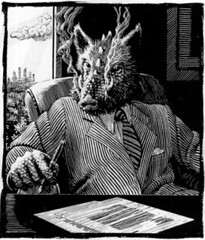
Superhero Pig Iron

Harrison Hogg, a Kentuckian who had moved to Cincinnati, was given a thousand acres by the government after the Revolutionary War on the present site of the city named after him. Hogg had, in the words of the original grant, “rendered valuable service during the war.”

The service in question was supplying pork, profitably, to the American militia via the Ohio River by an ingenious invention of Hogg’s called “pork paddleboats.” The boats began their journey in Cincinnati, and made their way northward to Pittsburgh, where the animals were slaughtered, smoked, and shipped still further north to the bedraggled and hungry American soldiers fighting in Pennsylvania, New Jersey and New York.

At first, Hoggville was only a refueling stop on the Ohio River, but Harrsion Hogg quickly figured how he could increase his profits by having his pork paddleboats begin their journey at Hoggville instead of Cincinnati. There was an exponential increase of pork in Hoggville, and travelers on river boats claimed they got wind of the river city long before they could see it. In 1846, an ordinance required piggeries to relocate outside city limits, but within ten years Hoggville’s city limits had expanded enough to take in the piggeries again.

Ironically, the only industry to speak of in Hoggville other than pork was pig iron. The shape of the sand molds used in smelting pig iron resembles a sow suckling her piglets, which is how the brittle iron produced by the process got its name. When Hogg laid out the platte for Hoggville, he chose not the traditional square but the irregular shape of the pig iron molds, because by that time swine, and everything associated with them, began to take on a mystical character for the Hoggs, like the trowel and hammer for the Masons.

Because Hogg’s pork was foul-tasting and hard to chew, the soldiers nicknamed it “pig iron.” According to one legend, Washington’s starving troops at Valley Forge refused eat their Hogg pork. “Beef, beef . . .” the soldiers reportedly pleaded with the quartermaster. One soldier who did eat his Hogg ration at Valley Forge was Oliver Tidwell, of Titusville, New York, a young schoolmaster. He became delirious for days after eating his rations. He later claimed that the apostle Peter appeared to him in a vision, chastising him for eating pork. “You must not eat pigs or touch their carcasses; they are unclean for you,” St. Peter told Titus. “Do not listen to those who say that Jesus did away with the prohibition against pork,” St. Peter added. “Do you think our Savior would eat pork chops? No, no, never! Go forth and tell the nation, ‘Pork is an abomination!’”

For the rest of his life, Tidwell was a zealous anti-pork crusader. As a schoolmaster, he had been a Deist, with a Thomas Paine pamphlet in his pocket even while he was in his delirium. But after the war, he became a deacon in the Titusville church and established an organization, Christians Opposed to Pork, or COP, publishing a pamphlet, “The Abomination of Pork as Revealed in a Delirium at Valley Forge, December 1777.” Opposed to the separation of church and state, Tidwell called on the framers of the Constitution to include an article prohibiting pork. In an eerie foreshadowing of contemporary history, Tidwell had predicted in his pamphlet that the Islamic prohibition of alcohol and pork would give the followers of Mohammed a decisive advantage over Christians in the centuries ahead. “Rum and pork will be the ruination of the American republic,” Tidwell prophesized.

Tidwell had never forgotten that Hoggville was the city that supplied the pork that had made him deathly ill, so he made a trip there in the summer of 1802. In a COP convention in Albany, New York, in 1804, he denounced Hoggville as “that wicked city on the Ohio River.” He accused its inhabitants of capitulating to pork with all the accompanying physical, moral, and spiritual consequences. “The people of Hoggville eat so much pork that they have begun to look and act like pigs,” he wrote. Tidwell went so far as to claim that Catholic children in a Hoggville parochial school were being taught in pig-latin, which claim was derided in newspapers and pulpits of Hoggville as the ravings of a madman. When Tidwell read an editorial that had been published in the Hoggville Times on July 4th, 1801, the twenty-fifth anniversary of the birth of the nation, he said that independence was precisely what the people of Hoggville lacked; they were always looking for a handout, such as the government’s original land grant to Hogg.

Tidwell accused Hoggville of pagan porcine-centered practices, everything from serving stuffed pig at Thanksgiving to a bridegroom’s obligatory squeezing of the testicles of the larger-than-life-sized pig that stood in front of the Hoggville town hall at midnight on the last full moon before his wedding day. In other towns, people put statues of deer on their lawn; in Hoggville, Tidwell said, they put statues of pigs. The Hogg family was rumored to have invested most of its wealth in gold, which it melted down and cast in the form of pigs. Always inclined to believe the worst of Hoggville, Tidwell had no doubt the rumor was true. “They worship not the golden calf but the golden pig,” he said.

Whether of not the rumors about the gold pigs were true, in life as in death, pigs were on everyone’s mind in Hoggville, from kids in cribs to the aged on their deathbed. The imposing Hogg Mausoleum in the Hoggville cemetery featured not a golden but a
bronze statue of a sow suckling eight piglets. After Hoggville children said their prayers at bedtime, they pleaded with their parents to play “This little piggy went to market.” Because it was not unusual for children in their early teens to be still attached to the “little piggy” bedtime ritual, the minister of the Presbyterian Church preached a sermon on the question: “At what age should parents stop playing ‘This Little Piggy’ with their children?” Rumor had it that the marriage of a Hoggville pork heiress had ended in divorce because her husband’s sexual interest in her had consisted solely of his playing “This little piggy” with her toes.

Other industries emerged in Hoggville in the 1800s, but they were all pig-related. The finely crafted Krautmitz pig-skinned gloves, which reportedly graced the h
ands of Queen Victoria, were made by a German-American Hoggville company. And Rampant Sporting Equipment, owned by a French-American family, was once as familiar a name in sporting equipment as Spaulding and Wilson later were. In the late 1800s, Rampant footballs, made of pigskin, were passed and dropped-kicked all over the country, from sandlot scrimmages to the annual Harvard-Yale game. The Hoggville Pigskins, a local semi-professional football team sponsored by the Rampant Co., had a live pig as its mascot. (Photo at right of 1910 Pigskin captain holding Rampant pigskin football.) The poet Carl Sandburg dubbed Chicago “Hog-Butcher for the World,” but Hoggville satisfied itself with the slogan that appeared on the Hogg Co. pork products that were shipped all over the country: “From California to New York: Hogg’s is America’s Favorite Pork!”

The most famous and profitable Hogg product was pork rinds. Though the English claimed pork rinds originated in the so-called Black Country, in the Midland coal mining area, the Hoggs claimed they were the inventors. Hogg pork rinds came in two varieties, Hogg Regular and Hogg Hairy. Pork rind aficionados would eat nothing but the Hairy variety, for they claimed pig hairs added a subtle spiciness to the rinds.

Another Hogg product, Hogg Deviled Ham, was rumored to be the snack of choice in houses of prostitution, as prunes and figs had been in brothels in Shakespeare’s London. It was presumably for that reason that the sale of Hogg Deviled Ham was banned in Boston. Because of these alleged unsavory associations, Tidwell said that if salvation was Jesus’s gift to mankind, pork was the devil’s. The Women’s Christian Temperance Union denounced “demon rum,” but COP condemned “demon pork.”

Harrison Hogg II insisted that if the devil was responsible for anything, it was not pork but unions. When the Meatcutter’s Amalgamated Union attempted to organize the Hoggville workers in the early 1900s, Harrison II blamed the trouble on socialist agitators from Youngstown. The Hoggs, he said, had always been givers, not takers, Good Samaritans, not Scrooges. He pointed out that his grandfather had begun the practice of personally distributing smoked hams to the poor at Christmas. Harrison II continued the tradition, but he was dogged by accusations that Hoggville’s poor, like the soldiers at Valley Forge, got only tainted meat.

The prosperity pork brought to Hoggville seemed like it would go on forever. Republicans and Democrats united to make Hoggville a one-party town: at election times, people sported only the Pork button. Well into the 1900s, Hoggville continued its love affair with pigs. The Hoggville Pigskins adopted a live pig as their mascot, and the

Chamber of Commerce adopted Porky Pig as the city’s unofficial municipal logo. A Porky Pig cartoon festival was held each May at the Majestic Theater, which served free “Porkcorn,” a Hogg specialty item that popped like corn when heated but was actually another variation of pork rinds. The smell of Hogg Porkcorn was always in the air during the Miss Pigtail contest, for girls sixteen and under, which was held every Fourth of July. Where else in American could you find lard shakes, pig’s knuckle sundaes, and chitlin splits served at the local malt shop?

In the twentieth century, Hoggville adopted a patron Superhero named Pig Iron. From infancy onward, children were told the bedtime story of how a lackadaisical little pig named Peter Porkchop fell into a vat of molten pig iron and emerged an indestructible superhero. Every boy in Hoggville grew up collecting Pig Iron comic books. Superman, Batman, Spiderman, Captain Marvel – all played second-fiddle to the Swine of Steel, the Porcine Powerhouse, and the Swill Billy, to list a few of the nicknames by which Pig Iron was affectionately known in Hoggville.

Hoggville’s Decline

All things, the bad as well as the good, must come to an end. Around 1950, Hoggville began to decline economically. That was about the time the American diet began to change. The whole country was becoming cholesterol conscious, but in Hoggville cholesterol became a dirty word. Children who used it were made to eat a teaspoon of lard. But it was not just cholesterol. Footballs changed shape, no longer resembling a cross between a basketball and a football; and, more to the point, footballs were no longer made of pigskin. The long-lived Queen Victoria had eventually passed away and so did the fad for pigskin gloves. Kidskin was in. Pigskin was out, for footballs, wallets, belts, and saddles. For the cholesterol and calorie conscious, beef jerky became the healthy alternative to pork rinds. In time, as hard as it was for local residents to believe, the Hogg plant closed, moving its operations to a Maquiladora in Mexico.


Main Street storefronts were shuttered. Pig Out, the popular Main St. drive-in restaurant with an exclusively pork menu and a 1950s decor, served its last pig-in-a-blanket on Labor Day, 1978. By 1980, the population of Hoggville had dwindled to half what it had been fifty years earlier. It was in 1980 that a lawyer, a developer, and a couple of local politicians concocted a real estate scam under the guise of a mall that they claimed would revive downtown Hoggville. But nothing came of it except a string of antique/junk shops, with clever names like Pig-in-a-Poke, Higgledy-Piggledy and the Pig Sty. Pig-related relics of Hoggville’s prosperous past could be seen dimly, through unwashed cracked glass store fronts, cluttering the display area – piggy banks, lawn pigs, stacks of Pig Iron comics, life-sized cut-outs of Pig Iron himself, a painting titled “Pignacious,” of a pig in trunks and boxing gloves, yellowing photos of Porky Pig Festivals, and lumps of pig iron that once had served as centerpieces on dining tables. Locally, Main Street became known as Pig Alley after prostitutes and drug dealers drifted into the depressed city. A Baptist minister denounced Main St. in a radio sermon with a biblically inspired name: “Route 666,” which he pronounced “Route Sex-Sex-Sex.”

Government Assistance

“The Lord never closes one door that he doesn’t open another,” is a homily that would seem to apply to Hoggville, for having lost its pork foundation, the city, in the second half of the twentieth century, created another in the form of political pork. How that came about is complicated, but the simple explanation was Bigby Rampant Hogg, a descendant of Harrison Hogg on his father’s side and of the Rampants on his mother’s. “Biggie,” as he had been called as a boy, and “Big” as he was known as a man, was south-central Ohio’s perpetually reelected choice in the U.S. House of Representatives. By the time Lyndon Johnson declared war on poverty, “Big” Hogg was the Republican Minority Leader and a poker playing buddy of the President. Hogg was as successful at providing pork projects for his Hoggville congressional district as his ancestors had been at providing pork products for America. In the so-called War on Poverty, Hogg played General Patton to Johnson’s General Eisenhower, winning repeated legislative victories for his depressed Ohio Congressional district.

There was a catch , however. If the War Against Poverty was ever won, Hoggville would lose. Hoggville succeeded only by continuing to fail, for the worse conditions in Hogg’s congressional district were, the easier it was for him to persuade the President and the Democrats in Congress to go along with his many pet pork projects, as he in return went along with theirs. But the pork had to be dispensed in such a way that it did not end his district’s privileged status as one of the poorest in Ohio. Neighborhoods of Hoggville had to continue to deteriorate. The population had to continue to decline. And the rates for crime, drug dealing, and prostitution had to keep rising even as the public dollars that were supposed to reduce them were pumped into the city.

Porkenomics

The solution to “Big” Hogg’s problem was to design pork projects so that it was not the poor but the relatively few well-to-do in Hoggville who profited from them. The decline of Hoggville had produced more than one millionaire among the bankers, lawyers and developers. The trick was to get dollars targeted for the poor to somehow trickle up to them. It was what a young reporter for the Hoggville Times dubbed “trickle up porkenomics,” a phrase he used in the company of his cynical buddies over a beer at a local watering hole but that he would never have used in the Times.

Hoggville became addicted to “Trickle-up porkenomics.” Risk was virtually eliminated from economic life. Only fools started a business without grants, subsidies, low-interest loans, tax breaks, or without an “entrepreneurial package” from some state or federal agency. In an example of Orwellian doublespeak, a federal agency designated Hoggville an “Entrepreneurial Zone,” or an “EZ,” for short. The cynical might say “Entrepreneurial Zone” was a euphemism for “Welfare Zone,” the kind of zone, incidentally, where existing businesses kept out other businesses that might compete with it for customers and for government dollars. It was all so “EZ,” so to speak. This kind of thing was going on in other urban areas in the so-called Rust Belt states, of which Congressman Hogg claimed Ohio was the rustiest. Just as the government had stepped in with acronymic programs like the WPA, FHA and NRA during the 1930s, the federal government from the 1960s on played the rich uncle by sending millions of dollars through programs such as EZ to private “non-profit” corporations known as Community Improvement Corporations, which in turn redistributed the millions to the privileged few to invest in faltering or startup businesses.

Few of the government-hatched businesses in Hoggville succeeded. When the government is the sperm donor, the result is usually a miscarriage. Main St. became “the street where businesses go to die.” In Hoggville, the failure of these new “enterprises” were as commonplace as a bowel movement, and those rare ones that did succeed made no noticeable difference in the high unemployment rate.

Hoggville suffered not just from trickle-up but also from “half-baked
porkenomics, for just as undercooked pork could carry the debilitating larvae of Trichinella spiralis, which migrate into the muscles of humans who eat contaminated pork, so did pork dollars end up destroying the moral and ethical fiber of Hoggville. Initiative went out the window, inventiveness went down the drain, and accountability up in smoke. Instead of pulling themselves up by their own bootstraps, local “entrepreneurs” supported themselves with government jockstraps. Instead of competing for customers, business people in Hoggville tended to collude with each other for government dollars. Instead of solving problems, they swept them under the rug. Cronyism replaced merit as the criteria for advancement. When outsiders moved to Hoggville, they learned that if they wanted to fit in, they couldn’t afford to keep whatever ethical and moral standards they might have brought with them. If they did not become team-players in the crooked game, they were benched or fired.

The least successful gravitated to public office and did the bidding of the unelected clique of millionaires. An important qualification for mayor appeared to be not having succeeded at anything. Along with businesses without competition, the city was cursed with government without ethics, religion without good works, schools without study, courts without justice, hospitals without cures, and lives without meaning.

All public institutions in Hoggville appeared infected by porkenomics, or the managerial equivalent of Trichinella spiralis. The hospital and local state university were the recipients of many millions of public dollars funneled to them by Congressman Hogg. But when measured by national and state standards, those institutions were shown to be near the bottom, just as the city, in regard to crime, drug use, and prostitution, was near the top.

Glory of Hoggsville

The glory of Hoggsville is that it has never been without pork opponents, of both sexes, and of various ages, races, and party affiliations, who have carried on heroically from generation to generation. At times they have been a handful; at others they have

numbered in the hundreds. Sometimes, they have been dismissed as misfits, malcontents, and vegetarians. At other times, they have been denounced as dangerous enemies of society. In the 1800s, they were accused of being COPs, secret members of Titus Tidwell’s Christians Opposed to Pork group. A hundred years later, in the 1950s, in the McCarthy era, the reformers were accused of being communists and queers, and of having ruined Hoggville by their un-American deprecation of pork. Then, more than a half a century later, at the beginning of the new millennium, in keeping with current fads, the reformers were accused of being domestic terrorists, as if they were allied to Islamic fanatics.

Until recently, pork opponents have struggled at a great disadvantage. The means of publication were always in the hands of the privileged few. The newspapers and radio stations were owned or controlled by the privileged. Reformers in Hoggville had to be satisfied with letters-to-the editor and mimeographed material distributed by hand, like samizdat material in the Soviet Union. The refusal of several council members to go along with the mall scam in 1980 resulted in a media-driven campaign that led to their removal from the office. A parade down Main Street denouncing the council members as “enemies of the people” had all the earmarks of a Ku Klux Klan rally, of which there had been several in Hoggville in the late 1970s. In Hoggville, people’s perceptions of what was what was heavily influenced if not dictated by the local media.

But that has changed dramatically in the last twenty years. An electronic revolution has democratized communication. Anyone with a computer and internet access has the potential to communicate with someone on the other side of the world or on the other side of Hoggville. The local media no longer have a monopoly on the news.

Now pork is a metaphor, representing all that is swinish in Hoggville – the lust for money, the plundering of the common weal, the debasement of local politics, the pollution of the environment, the eminent domaining of neighborhoods, the bulldozing of the past, the institutionalization of incompetence, the loss of initiative– all the things that motivate the reformers to do what they do and say what they say, day after day, year after year, only now what they are doing and saying is not a secret. Anyone can read it on the internet. The genie is out of the bottle and is not going to be put back anytime soon, if ever, and Hoggville may never be the same. Not even Pig Iron will stop them.

Sunday, July 02, 2006

Unrepresentative Government


constitution
U.S. Constitution


For several pressing reasons, citizens of Portsmouth recently proposed that the terms for city council members be reduced from four to two years. Veteran community activist Richard Noel wrote to the Portsmouth City Council on 26 June 2006, “On behalf of the Concerned Citizens Group, I am writing to request that City Council place a City Charter Amendment on the upcoming November 2006 ballot that would change ‘SECTION 3 – POWERS, ELECTION, TERM, VACANCIES’ in order that council member terms of office be changed back to two years from the current four year term.” Portsmouth City Council members had been elected for two-year terms up until 1985, when that provision was changed by charter amendment.

It is important to note that the change the Concerned Citizens are proposing would affect only the six council members, not the Mayor (chief executive officer), the city solicitor (the chief legal officer), and the other city officials. Under the Concerned Citizens proposal, those officials would continue to serve four-year terms.

Historical Background

Some historical background is helpful to understand the reasons for the Concerned Citizens’ proposal. You can’t understand the structure of local government, including the Portsmouth City Council, without understanding the structure of state government, and you can’t understand the structure of state government without understanding the structure of federal government because what was decided at the federal level influenced what was decided at the state level, and what was decided at the state level influenced what was decided at the local level, in Portsmouth.

The Founding Fathers of our nation intended that the U.S. House of Representatives would be “the people’s house,” the body of the federal government that would be directly elected by, and therefore most accountable to, the people. It was to be the most representative and the most accountable body of the federal government. In the Federalist Papers, Hamilton or Madison wrote, “As it is essential to liberty that the government in general should have a common interest with the people, so it is particularly essential that the branch of it under consideration [the House of Representatives] should have an immediate dependence on, and an intimate sympathy with, the people.”

The best way they could think of to insure that the House of Representatives would remain “the people’s house,” was frequent elections. “Frequent elections are unquestionably the only policy by which this dependence and sympathy can be effectually secured (emphasis added),” they wrote in number 52 of the Federalist Papers. In regard to frequent elections, they quoted, in number 53, the proverb that held “that where annual elections end, tyranny begins.” But that proverb was an old one, and conditions had presumably changed. Elections every year were impractical when many people spread over large areas were involved. Somewhat reluctantly, the Founding Fathers decided that the maximum term for a representative should be two years. Elections would take place biennially. “All these considerations taken together warrant us in affirming, that biennial elections will be as useful to the affairs of the public as we have seen that they will be safe to the liberty of the people.”
In the U.S. Constitution, Article I deals with congress, suggesting how important the legislative branch was in the eyes of the Founding Fathers. American democracy begins with and is rooted in the legislative branch, and especially in the House of Representatives, the members of which were elected directly by the voters in the states. The direct vote helped to insure that the House of Representatives remained responsive to the people’s will, and the stipulation that the vote would take place every two years further strengthened the people’s control of the House.

When Ohio designed its state government, it closely followed the federal model, with a General Assembly that consisted of a House of Representatives and a Senate. Following the federal model, terms for the Ohio House, the “people’s house,” were two years.

Local Government

Most local governments in Ohio usually followed the state model. In local governments, the legislative body, the counterpart to a House of Representatives, is the city council. Following the House of Representatives example, two-year terms were the general rule for city councils. But a number of cities and towns have shifted to a mixture of two-terms for ward representatives and four-year terms for at-large council members; other communities have shifted to a four-year term for all council members. The Columbus City Council has four-year terms, but the city councils of Cleveland and Cincinnati retain two-year terms. While there are exceptions, generally smaller communities are more likely to have four-year terms for city council, the larger ones two-year terms. Why the difference?

A possible explanation is that larger urban areas with a history of municipal corruption and machine politics see two-year terms as a way of removing the bad apples before they can do their worst. Cities and towns that have been plagued by corruption and that distrust politicians as a class want city councils to be on the short leash that two-year terms represent. A clique or political machine would more likely arise and persist in a city where members of city council had four rather than two years in which to plot and scheme.

Communities that don’t have a history of crooked politics don’t want to go through the trouble of having elections every two years. But large cities like Cleveland and Cincinnati may have learned that biennial elections are worth the trouble because they make the city council accountable every two years. They have learned from experience that at least some politicians are not to be trusted. The same thing that makes four-year terms seem sensible in some communities makes them seem unwise in others. Communities with honest politicians and with little or no corruption think four-year terms are more practical; cities with dishonest politicians and a history of corruption think four-year terms are asking for trouble.

Checks and Balances

The Founding Fathers established three branches of government, the legislative, the executive, and the judicial, which were supposed to serve as checks and balances on each other. The counterparts of those three branches of government are discernable in local government in the city council (legislative), the mayor or city manager (executive), and the city solicitor and city courts (judiciary). Unfortunately, at the local level, too often the three branches of government, rather than checking and balancing each other, are in cahoots, forming a tyranny that represses and exploits the public they are supposed to be serving. If you want to see an example of the kind of tyranny our Founding Fathers were afraid of, just look at Portsmouth where the city council, the mayor, the city solicitor, the city clerk have worked secretly, like a gang of safe-crackers, to rob the people. The Marting robbery is the most recent and notorious example of their handiwork, but it is only one of many jobs they have pulled.

They will resist any attempt to shackle their activities, such as limiting city council terms to two years, with the same kind of campaign they waged after the Marting deal was nullified by the courts.

Baumanmartings
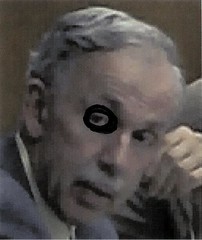
Council president Baughman

Just as Mayor Bauer predicted chaos would reign if he was recalled from office, and just as council woman Carol Caudill said “God help the city of Portsmouth” after she was recalled, the present city government has already begun claiming chaos will reign if the city council returns to the two-year term. Howard Baughman, the president of the city council, has already said that council members could not possibly learn to understand budgets in two years. Don’t believe it for a minute. The real reason Baughman and others will furiously oppose the two-year term is that two-year terms will loosen the grip of the lawyers and developers who currently control the city through the city council. It will be a little harder for the unelected few who control the city council if its members have to face the voters more frequently. The words of the Founding Fathers are worth repeating: “Frequent elections are unquestionably the only policy by which this dependence and sympathy can be effectually secured.”

Municipal Tyranny

What the Founding Fathers feared most was the “tyranny” and abuse of power by those in control of the government. To those who live in honest and peaceful communities, the notion of “tyranny” seems antiquated. But tyranny is still alive anywhere that corrupt individuals, either in elective office or in appointed positions, conspire to deprive the people of their rights and liberties.

Portsmouth is one of those cities where tyranny still rules and where the people need whatever protection is afforded by two-year terms for council members. The unhappy history of the city since the change to four-year terms in 1985 underscores this point. Portsmouth’s elected government has too often been the pawn of an unelected, shadow government, the chief vehicle of which is the Southern Ohio Growth Partnership. In the absence of two-year terms, frustrated citizens have had to resort to the recall provisions in the city charter. Two-year terms for council members are not going to work miracles or eliminate Portsmouth’s shadow government, but they will weaken the grip of the tyranny and make recalls less likely.

Portsmouth has one of the highest per capita crime rates of all Ohio cities, but politicians, unlike prostitutes and drug-dealers, do not have the law breathing down their neck. On the contrary, the police chief is out to protect the city council and other elected officials from being recalled. At one city council meeting, he called those trying to recall elected officials as “domestic terrorists,” and he mentioned the extraordinary efforts the police department had made in investigating the recall effort in the Second Ward, but not without also apologizing to other council members facing recalls for not having been able to do the same for them.

Honest capable people in public office have no reason to object to two-year terms, because they can be assured of reelection if they do a good job. It’s the dishonest council members, and especially those who have been appointed rather than elected, who want the four-year terms to continue. Four-year terms for city council members help perpetuate the political machine that controls Portsmouth on behalf of the SOGP.


Learning Curves, Chaos and Dummies

In responding to the request from the Concerned Citizens to put the two-year proposal on next November’s ballot, Baughman replied at the June 25th city council meeting, “There's a learning curve when you become a city councilman.” That Baughman could not come up with a better defense of four-year terms than “learning curves” shows what shaky ground he stands on. The argument that it takes council
members more than two years to understand budgets is absurd. The city charter gives the Mayor and the Auditor primary responsibility for the budget, and since they would continue to serve four year terms, the “learning curve” argument for council members is bogus. Given their learning curves, some council members could serve twenty years and not understand the budget, because some people have a better eye for figures than a head for figures.

The only other defense beside “learning curves” Baughman offered against two-year terms was that “It would just be constant turmoil and turnover every two years.” Though all council members would run for election at the same time, it is unlikely that they would all be defeated. And if they were, that might be the best thing for the city.

If biennial elections bring constant turmoil, how have the U.S. House of Representatives, the Ohio House of Representatives, and the city councils of many cities in Ohio managed to survive for as long as they have? Where is the two-term related turmoil in Alliance, Amherst, Athens, Blue Ash, Chillicothe, Cincinnati, Cleveland, Cuyahoga Falls, Lorrain, North Royalton, Norwood, Parma, Silverton, Warren, Wilmington, Wyoming, etc? There has been a lot of turmoil in the Portsmouth City Council in the past twenty-five years and much of it has been the result of four-year terms and the recalls that would not likely have taken place if council members had faced the electorate every two years.

Summary

What follows is a summary of the reasons the Concerned Citizens are calling for a return to two-year terms of council members.

1. The most pressing reason is that two-year terms will make council members more accountable to the voters. The voters should not have to wait four years to express their preferences via the ballot box. Four-year terms have not resulted in more honest and efficient city government. Four-year terms for council members, which replaced two-year terms in 1985, have made things worse, not better.

2. Reducing the terms of council members from four- to two-year terms will reduce the need for and justification of recall elections. The city charter permits the recall of council members, but the charter stipulates that the recall process cannot begin until the elected official in question has served six months in office. With only eighteen months to go before another election, frustrated voters are more likely to concentrate on defeating a controversial council member at the polls rather than going through the complicated and risky recall procedure. I say risky because Portsmouth police chief Horner has labeled the organizers of recent recall attempts as “domestic terrorists,” and one of the recall candidates, Native-American Russell Cooper, was arrested for alleged “irregularities” on his petitions. The only alternative voters have when the object of their ire has forty-two months left on his term is to resort to the recall process, and risk being harassed and even arrested. When a council member has eighteen or less months to go, campaigning to defeat him in the next election would be the most effective way to remove him or her.

3. Putting council members in office for four years is unwise because, as honest and conscientious as they may be, and as dishonest and underhanded as they have too often been, they are generally less well-educated and less financially secure and for various reasons more likely not to finish their term; and they are twice as likely not to finish a four-year term as they are a two-year term. Under the city charter rules, something as simple as moving out of the ward they represent disqualifies council members from continuing in office. For an example of unadulterated unrepresentative government, look no further than the First Ward. We recently saw a dishonest councilman, Timothy Loper, move from the First Ward to the Sixth Ward and then, with the connivance of the city solicitor, he not only did not resign but ran for another term as First Ward councilman! Because of these electoral shenanigans in the First Ward, where the council appointed a local lawyer, Michael Mearan, to replace Timothy Loper, who first got on the council as a result of a recall election, those of us who live in the First Ward have a right to revive the famous slogan of the American Revolution, “No Taxation without Representation.”

4. The four-year term for city council members undermines representative government because too many members first take a seat on the city council as a result of an appointment rather than an election. The city charter calls for the city council to appoint replacements when a vacancy occurs. If vacancies were a rare occurrence, this would not be much of a problem. But given the frequency of vacancies, the appointment power of the city council is a serious problem, a problem made even worse by four-year terms. The current president of council, Baughman, was originally an appointee. So is current Fourth Ward councilman Albrecht, and so is First Ward councilman Michael Mearan. They were all first appointed rather than elected. It is possible that within the foreseeable future the majority of city council will have been originally appointed rather than elected to office.

mearan
Unelected First Ward councilman

5. Council President Baughman’s argument that two-year terms for council members will bring chaos to city government is bogus and hides the real reason he and others will do everything they can to prevent a return to biennial elections: they want to maintain the corrupt status quo.

Sunday, June 18, 2006

The Big Store


BIGSTORE


It’s hard to believe. They are now talking about converting another former big Portsmouth department store into a city hall. The more things change, the more they stay the same.

For the past four years Portsmouth has been rocked by controversy involving another big department store that the city wanted to convert into a city hall.

The scandalous sale of the Marting department store to the city led to the recall of Mayor Bauer and the recall of two council members, Ann Sydnor and Carol Caudill. The Marting sale led to a court case, brought by Teresa and Bob Mollette, in which Judge Marshall ruled the Marting sale invalid. Undeterred, Mayor Kalb and the clownish city council turned right around and worked out another arrangement with the Marting Foundation whereby the city got stuck with the Marting department store again, only this time the Singer building (often inaccurately referred to as the Adelphia building) was thrown in to the mix: the city acquired the Singer building, along with the Marting department store, and committed itself to converting the big one into a huge city hall and the dinky one into a police station. Outraged at the Kalb administration’s contempt for public opinion, the Concerned Citizens of Portsmouth got the proposed conversion of Marting’s placed on the ballot last May 2nd, when it was soundly defeated by the voters.

So now what are the clowns doing? With the cooperation of the SOGP’s house organ, the Portsmouth Daily Times, they are beginning a public relations campaign to convince the public that the Fifth Third Bank building, formerly the Montgomery Ward department store, would make a good city hall. How many times does a sucker have to buy the Brooklyn Bridge before he learns his lesson?

FIFTH THIRD
Fifth Third, former Montgomery Ward store


FIRST COMMANDMENT

I first proposed back in March and repeat it here, slightly amended, the First Commandment of Portsmouth’s over-privileged: “Local government shall not construct a new building or renovate one it already owns when a doctor, lawyer, businessman, or banker has an old building that can be turned into a public building at great public expense.” The five buildings I offered as examples were lawyer John Thatcher’s house, on Franklin Boulevard; Dr. Rooney’s house, on Camelot Drive.; George Clayton’s Kenrick’s department store; Dr. Singer’s so-called Adelphia building, on Washington St.; and the Marting department store, on Chillicothe St. Now add the possibility of the Fifth Third Bank building to that list.

The Fifth Third Bank is reportedly considering vacating their building, on Chillicothe St., right across from Marting’s. According to the Scioto County auditor’s records, Fifth Third bought the building from Bank One in May 1998. In a press release at that time, Stewart M. Greenlee, president and chief executive officer of Fifth Third Bank of Southern Ohio, said that the purchase of the building “will allow us to greatly expand our Portsmouth banking operations . . .”

Why is Fifth Third Bank, eight years later, moving out of the building? Wouldn’t you think that would be one of the first questions a newspaper reporter writing a story about the Fifth third Bank building might ask? Did its banking operations in Portsmouth fail to expand, as president Greenlee predicted they would? Or is the building itself perhaps something of a headache, particularly in its heating and cooling operations? In an interview in the documentary Recall of Mayor Bauer 2004 (available at SSU and the Portsmouth Public Library), former Portsmouth mayor Frank Gerlach told me that the maintenance problems in the former Montgomery Ward building were no secret and could serve as a warning to those who wanted to convert an even older department store, Marting’s, into a city hall.

Whatever other reasons Fifth Third Bank might have for moving out of the former Montgomery Ward building, the profit it might make by unloading it are potentially large. According to records at the county auditor’s, available online, Fifth Third paid $231,000 for the property in 1998. Those same online records say that in 2005 the property had increased in value to $2,847,020. Leaving aside the question of how or why it happened, that’s a staggering 10-fold increase in value in seven years. If Fifth Third could sell the property at anything approaching $2,847,020, or even half of that, it would still be doing well financially. I learned from a visit to the auditor’s office that just this year the value of the property had been “readjusted,” and dramatically reduced to $1,281,490, or less than half what it was worth last year. Could it have been reduced for a quick sale?

MIKE MEARAN: CONFLICT OF INTEREST?

Now that he has been appointed, not elected, to the city council and is acting like a city manager, the lawyer Mike Mearan may be just the one to serve as the go-between in unloading the former Montgomery Ward building on the city. It was Mearan who worked out the deal that got the city to take the so-called Adelphia building off the hands of absentee landlord Dr. Herbert I. Singer, of Los Angeles. Singer owed about $20,000 in back taxes on his building and other Portsmouth property. The deal Mearan worked out for Singer with the city took Singer off the hook on his delinquent taxes and also qualified him for a tax-write off. But Singer would qualify for that tax write-off only if the city used the building for some public purpose. The public purpose that the city decided on
or that the SOGP decided for it was to convert the Singer building into a police station. The Singer building was the Mini-Me of the Marting deal, so no one seemed to notice.

Incidentally, when Singer bought the building in 1984, Mearan acted as the middle man, just as he may be acting now as the middleman for the Fifth Third building. Mearan appears on the scene like the fourth Marx brother, the unfunny one, who acts smart.

The question arises, since Singer was his client, whether Mearan has a conflict of interest. How can he hope to be objective, as a city councilman, about either the Singer-Adelphia building or the Fifth Third Bank building, with which it has been bundled? Whom is he serving, the citizens of Portsmouth or Singer and others? Isn’t this a question a reporter from the Daily Times should have asked Mearan? Of course it is.

It is one of the vices of our river city that the city’s building plans seem to depend on what unrentable and unsellable properties private individuals and corporations want to unload on the city to escape property taxes and earn a tax credit. City officials are only too eager to accommodate the wheeler dealers of Portsmouth by using public funds to buy their distressed real estate. When property loses all commercial value (“It ain’t worth anything,” as Marty Mohr said of the Marting building) the city or county gets stuck with it. When all the juice is squeezed out of the lemon, the city ends up with the rind. There is an adage that if you get stuck with a lemon, make lemonade. But what do you do with a lemon rind? The Fifth Third building, alias the Bank One building, alias the Montgomery Ward department store, may be about to be squeezed for the last drop, and the taxpayers will be stuck with another rind.

The former Montgomery Ward department store, like the Marting department store, appears much too large for the current needs of the city government. Can somebody help me with the math? How is it that Portsmouth in 2006, when its population is about 20,000, needs a building that is three times the size of the building that was erected at a time when the population was more than twice what it is now? Unless taxpayers want to put the mayor and other city officials in offices large enough for them to play cornhole during lunch hours, converting the Fifth Third Bank building into a city hall makes about as much sense as converting Marting’s did. Mayor Kalb may feel a building as large as Marting’s or Fifth Third is what the taxpayers would want him to occupy, in keeping with the dignity of his office, just as he thought they would want him to be driving a new Ford Expedition SUV. The city has wasted millions of taxpayers' dollars on its dreams and schemes for the Marting building, but the voters thought they had put an end to even bigger expenditures when they defeated the Marting referendum at the polls on May 2nd. If the city acquires the FifthThird building, it may only be getting started. Estimates of converting the Fifth Third will run into many millions, and remember that initial estimates of conversion are usually appreciably less than the final costs, because those who have an interest in promoting the conversion want to minimize the true costs.

If there is a legitimate case for converting the Fifth Third building into a new home for city government, Mayor Kalb is not the one who can make it. After the Marting’s fiasco, he has lost all credibility when it comes to any building. If the Municipal Building cannot be repaired, and even worse if it is a death trap and should be evacuated as soon as possible, as he has claimed for years, then something should have been done about it a long time ago. But there are those who say that the Municipal Building could be fixed, and others who say, for historical and architectural reasons, that it should be fixed. But the issues behind the Municipal Building may not be engineering, architectural heritage, and safety, but land speculation, gambling, and prevarication.

PRIME REAL ESTATE

The city council may be still shopping around for a new home because some unidentified developer is apparently interested in the land on which the Municipal Building is located. Somebody has reportedly been interested for more than ten years in developing that land. Kalb in the past and Mike Mearan more recently have referred to the land under the Municipal Building as prime real estate. Prime real estate? Dubbed “The Queen of the Rust Belt” by one travel writer, downtown Portsmouth’s Ramada Inn has been able to stay in business as long as it has partly by serving as a dormitory for students and as a temporary half-way house for those with DUI problems. Why would land right across the street from the Queen of the Rustbelt be considered prime real estate? Why would anyone want to build another hotel or “a conference center,” to cite another rumor, at that location?

In the zeal of some to tear down the Municipal Building, what we are possibly dealing with is the politics of gambling. The land on which the Municipal Building rests, as well as adjoining real estate in downtown Portsmouth, will increase dramatically in value if gambling comes to Portsmouth. If and when that happens, land prices in downtown Portsmouth will probably skyrocket. Why waste any of that potentially prime land on a municipal building when a docking facility for gambling boats could be built there? And why repair the current Municipal Building when there’s another former department store up on Chillicothe St. that may be empty soon and weighing heavily on the hands of its owner?

At some point in the mid-1990s, I thought I might transfer some of my banking to whatever bank occupied the premises of the former Montgomery Ward building. It might have been Fifth Third, or it might have been Bank One at the time. My recollection was the ground floor had recently undergone major renovations. The setting was plush. The woman behind the desk who interviewed me was dressed to kill. The few employees I dealt with struck me as people who, dressed in new clothes, felt they had come up in the world, though they still had to deal with peasant depositors. Arrivistes is what they reminded me of. An arriviste is someone who has suddenly risen to a higher economic status but lacks the class or confidence to carry it off. Even though I was in pokey Portsmouth, not New York, the renovated former Montgomery Ward building reeked of expenditure and pretentiousness. I decided that any bank that wasted money trying to create an expensive atmosphere was not a bank I wanted to do business with, not permanently anyway. I decided to keep all my banking at my plain Jane bank. At least nobody there was trying to pretend they were in downtown Manhattan or even downtown Columbus, which is to say any place but downtown Portsmouth.

The politicians in the Municipal Building strike me as arrivistes who are embarrassed to be working in a modest building constructed in the face of great financial difficulties during the Great Depression. Since they hold public office, they obviously feel they deserve better from the taxpayers of Portsmouth. Architectural and historical awareness, along with manly competitiveness, seems to have been bred out of most of the pork-fed males in the area, particularly the rich white trash. They are incapable of appreciating the tarnished charm and historical significance of the modest Municipal Building, which may have been systematically neglected and vilified in preparation for the great day when gambling comes to Portsmouth.

The original plans for the Municipal Building were drawn up before the stock market Crash of 1929; those plans called for a larger structure than what the city had to settle for in the Great Depression that followed. Back then, city officials realized they had to scale back and live within their means. Our current officials act as if it is still the Roaring Twenties, and that the sky is the limit when it comes to a new home for the city government.

They want the big official SUV and the big former department store with the phony false façade and offices big enough to play cornhole in, and never mind the millions of taxpayer dollars it will take to finance their illusion of having arrived.

Portsmouth taxpayers can’t afford the dreams of the clownish Marx Brothers in the Municipal Building, not when times are as hard as they are. The city government needs to think smaller, think more economically. They need to get over the Big Store mentality. In considering moving out of the former big store, isn’t that what the Fifth Third Bank might be doing? Perhaps the bank's Portsmouth operations did not “greatly expand,” as its president had predicted they would. And Fifth Third has billions in assets. How much does the city of Portsmouth have? Not enough to waste on more Big Store fantasies.


5th 3rd cartoon

Sunday, June 11, 2006

MySpace Generation

This summary is not available. Please click here to view the post.

Saturday, June 03, 2006

Vox Porkopoli

PORKPIN_1


Writing recently in Rolling Stone magazine, Robert F. Kennedy, Jr., claims that “Republicans prevented more than 350,000 voters in Ohio from casting ballots or having their votes counted – enough to have put John Kerry in the White House.” When it comes to elections, there’s something about Ohio. The whole nation now knows that.

What is true at the state level, in Ohio, is also true at the smallest political unit, the ward, or at least in Portsmouth’s First Ward, which I live in. A candidate who was not a legal resident of our ward was allowed to run for the city council in 2004, though the city charter states that anyone running for city council must be a resident of the ward he or she seeks to represent. The candidate in question, Timothy Loper, had already shown himself useful on the city council to the people who control Portsmouth, so a residency requirement was not going to be allowed to stand in the way of his representing a ward he did not live in. Portsmouth’s sleazy city solicitor, David Kuhn, took Loper under his wing and advised him each crooked step of the way. Through a tortured and ridiculous display of legal finagling, Kuhn declared Loper was still a legal resident of Ward One even though he had moved to another ward.

I challenged the city solicitor’s tortured logic and appealed to the Scioto County Board of Elections. The Board ruled Loper was not a legal resident of the First Ward, having moved out before the November 2004 election. Since he was not a legal resident of the First Ward, Loper was not a legal candidate in that election. Defying logic and the Board of Elections, Kuhn delivered a formal ruling declaring that Loper, although living in the Sixth Ward, was a legal resident of the First Ward.

The issue of whether Loper was still the legal representative of the First Ward, of whether the Board of Elections or Kuhn was correct, was placed on the agenda of the city council. Because witnesses would have appeared at that meeting, and Kuhn would have been required to defend his flatulent ruling on Loper’s status, there was no way that council meeting was going to take place. One of the ways in which the Portsmouth city council avoids having to face the truth is to have several council members not come to a meeting. Lacking a quorum, the meeting is cancelled. The first meeting of the city council I ever attended, several years ago, was cancelled under just those circumstances, when current mayor, then president of council Jim Kalb joined others in absenting himself. Like students who skip school rather than show up for a test they know they will flunk, the city council absented themselves rather then face the Loper issue.

Cockamamie Argument

Shortly thereafter, Loper resigned from the city council, claiming he did not have the money to hire a lawyer to defend himself. Somebody was providing thousands of
dollars of materials to renovate the decrepit house Loper had fraudulently claimed as his First Ward residence, and somebody was providing the labor for the renovation, so his poverty plea rings hollow. I believe Loper was persuaded to resign by those who knew that the ruling of the Scioto Board of Elections would prevail over Kuhn’s cockamamie argument, and Loper had become an embarrassment who was not worth fighting for. Loper said at the time of his resignation that he had been persuaded by certain unnamed businessmen that he was mayoral material and should consider running for Mayor in 2008. Holding out the prospect of his being mayor someday
that was possibly one of the lures Loper’s handlers used to get him to resign. At one council meeting Loper vowed he would not be played for a dummy any longer, but that declaration, if sincere, did not last long.

Elections are supposed to be the essence of democracy. But instead of having a special election for the First Ward, the city council is going to appoint Loper’s successor. The city charter does allow the council to appoint the replacement of somebody who vacates a seat for any reason. But my argument is that Loper did not legally occupy the seat, since he was unqualified to run for the seat in the first place. Thousands of American troops and hundreds of thousands of others have died in Iraq. One of the reasons for their sacrifice has allegedly been to have free elections in Iraq. But in Portsmouth’s First Ward we will not have an election. Even if Loper’s election was illegal, Kuhn has been quoted saying in the Portsmouth Daily Times, the city council has the right to appoint his replacement. Even if the election was not legal!

Another argument that has been made is that the city cannot afford a special election. A city government has squandered millions of dollars on the Marting building, which the voters have consistently indicated they did not want, but a couple of thousand dollars on an election, that we are told we cannot afford. The mayor thinks the city can afford somewhere between $25,000 to $35,000 on a new Ford Expedition for him, to improve the city’s image, but not a dime to allow voters of the First Ward to choose our council person. No, they will choose our representative for us. One of the six council members has already been appointed, rather than elected, and yet another one will mean one-third of the city council will not have been elected.

And what of the somewhat kettle-of-fish pool of applicants the city council will choose from? The relatively large number of them alone may reveal something important about the porkish character of Portsmouth.

Loper ran unopposed in Nov. 2004. So why now, less than two years after that election, do we have some six applicants (who presumably are legal residents of the First
Ward) when we previously had only one candidate? I have trouble trying to figure this one out, but the only explanation that occurs to me is that, given the porking of our local culture, being given something is so much more enticing to potential Portsmouth politicians than earning it. An election presumes candidates will do the difficult work of collecting signatures and do at least some campaigning. Unlike applicants, candidates have to run for office. That usually takes months of effort, even at the ward level. It might even require the expenditure of a little money for campaign expenses.

It is much easier to apply to the city council for the office, rather than run for it. For applicants there is no collecting signatures, no running the gauntlet that City Clerk Aeh, City Solicitor Kuhn, and Police Chief Horner set up for dissident candidates, who are treated like
domestic terrorists. An applicant can have the whole process over in about a week. How much easier it is to receive than give. The Portsmouth City Council gives new meaning to the phrase “to apply oneself.” Maybe there should be I Applied buttons for applicants

Vox populi is Latin for voice of the people. What we’ve got in Portsmouth appears to be vox porkopoli.

I Applied


To view other River Vices blogs on the theme of Portsmouth pork:

http://rivervices.blogspot.com/2006/04/ohio-blackeye-state.html

http://rivervices.blogspot.com/2006/03/porksmouth.html
http://rivervices.blogspot.com/2005/03/feeding-tubes.html
http://rivervices.blogspot.com/2004/12/pork.html
http://rivervices.blogspot.com/2004/12/high-on-hog-jesse-stuarts-ohio.html
http://rivervices.blogspot.com/2004/11/culture-of-dependency.html

Monday, May 29, 2006

Shadow Government

Welcomectr
Headquarters of Shadow Govt.


It has happened gradually and unobtrusively, without most people being aware of it, but over the last half century, important functions of Portsmouth local government have been privatized. The result is that we now have a powerful shadow government, the origin of which can be traced back to 1964.

To quote from an earlier River Vices posting, “in March 1964, the Portsmouth City Council made a momentous decision. In a resolution, numbered unlucky #13, the council turned much of the economic control of the city over to a private ‘non-profit’ corporation named the Portsmouth Area Community Improvement Corporation (PACIC). In Resolution #13, the Portsmouth City Council granted PACIC an extraordinarily broad mandate. The mandate of this private corporation, consisting mainly of businessmen, bankers, and lawyers, was no less than ‘To promote the health, safety, morals and general welfare of the inhabitants of the community . . .’ In the following year, 1965, the Ohio state legislature passed a law allowing municipalities to designate community improvement corporations, such as PACIC, as their agent. As if PACIC hadn’t already been granted extraordinary power in Resolution #13 . . . , the Portsmouth City Council passed another resolution (#30), designating PACIC as the city’s official agent, or legal representative.” PACIC eventually morphed into the SOGP.

Working with other community improvement corporations (CIC’s) and with other unelected quasi-public officials, the Southern Ohio Growth Partnership (SOGP) has come to do the heavy financial lifting in our municipal affairs. A shadow government has evolved in the Portsmouth area made up of a bewildering array of acronyms, not only SOGP but GPEC (Greater Portsmouth Enterprise Community), CAOSC (Community Action Organization of Scioto County), SOPA (Southern Ohio Port Authority), etc.

Through pork projects and abatements, the SOGP has choked the tax base of Portsmouth, weakened initiative, encouraged collusion, and stifled the local economy. The worse it got in Portsmouth, the more pork the SOGP could rustle from state and federal governments.

To finance its activities, our shadow government depends not directly on taxes, as our city government has to do, but on streams of pork dollars from public and quasi-public sources. One of the largest sources of pork for Portsmouth and the SOGP, ironically, is the U.S. Dept. of Agriculture (USDA), but there are many other sources. Under the arrangement that has evolved in the last half century, our usually inept and subservient city government handles the small change, relatively speaking: the SOGP handles the big bucks. For example, the 2003-2004 records of the SOGP lists over $20 million in “bank investments,” some of the recipients of which are current or past members of the SOGP. The SOGP has handled hundreds of millions of dollars. The city government, by contrast, is left to squabble over whether the mayor should get a new automobile or whether there is money to fix the leaky roof of the Municipal Building. Portsmouth’s real city hall is not the Municipal Building but the new Welcome Center, where the SOGP has its headquarters. It was USDA pork that made the construction of the Welcome Center possible.

Given the limitations of local government, it was to be expected that in the evolution of local and county government an alternative to the traditionally ineffective, subservient, and corrupt local government would arise. The number of Bob Mollettes have been too few and far between in city government. The vehicle for this new non-elective, shadow government are “community improvement corporations,” the CICs. To quote from a handbook for county commissioners, “A community improvement corporation (CIC) is a nonprofit corporation organized under the provisions of Chapter 1724 of the Revised Code for the sole purpose of promoting, advancing and encouraging the industrial, economic, commercial and civic development of the area.” In a report on CICs, the Columbus Dispatch (2/6/95) quoted Mike Shannon, a lawyer who had served as state community improvement corporations coordinator from 1985 to 1988. “They[CICs] can do everything from street beautification to economic and industrial development.” Shannon added, “They [CICs] can make loans to businesses or partnerships under certain conditions; acquire property by such means as purchase or eminent domain; and assume control of businesses in financial trouble.” Mary Bearden, Dublin Ohio’s economic development coordinator, told the Dispatch that CICs “have the rights and provisions by law to act as developers, to buy land and develop property, but at an arm's length away from bureaucracy.” What Bearden means by bureaucracy is local government, local elected officials, or what we might generalize and call the vestiges of local democracy. That is what has to be kept at arm’s length.

In other words, CICs privatize local and county government; they turn government, and especially the financial aspects of government, into a business. “It’s hard for cities to function like a business,” Shannon said. It’s hard for cities to function like a business principally because there are all those bothersome details of the democratic process to deal with, like voters, elections, and public accountability. CICs members are not elected, they are appointed and therefore are not subject to recall. They are not subject to open records laws requests either. They are required to make only annual budget reports, and the reports of the SOGP can be very hazy. For example, in a SOGP bare budget report for 1997, of $314,000 allotted for something called a Small Business Education Center, $252,861 had been spent. Just what was the Small Business Education Center that SOGP had spent a quarter of million dollars on? In a letter dated May 6, 1997, Wally Leedom on behalf of the Shawnee Sentinel requested a detailed breakout of the budget and a clarification on the Small Business Center. There is no indication he ever got a response. A shadow government, run like a business, can stonewall in such a situation, as I have discovered several times when I tried to get information. CICs like the SOGP can get away with, well, if not murder, at least highway robbery, as the folks at Enron did.

What happened in Portsmouth was that responsibility for the economic growth of the area was taken out of the hands of the local and county government and put into the hands of a private, putatively non-profit corporation that was made up of the influential and wealthy individuals in the community, mostly lawyers, bankers, and business people, most of whom had never sunk to running for public office but who were only too willing to serve on a community improvement corporation. Why were they so willing to serve on CICs? To adapt the famous remark of Willy Sutton, because CICs are where the money is. Before there were CICs, the greedy businessman actually had to get his hands dirty and run for local public office. Not anymore, not when there are CICs.

Many people have been led to believe making government more businesslike is the best possible thing that could happen. But is it? Business people and chambers of commerce would have us believe businessmen are a blessing and the heros of the American economy. That's not the lesson I derive from American history. The famous investigative journalist Lincoln Steffens wrote early in the last century, “There is hardly an office from United States Senator down to Alderman in any part of the country to which the business man has not been elected; yet politics remains corrupt, government pretty bad, and the selfish citizen has to hold himself in readiness like the old volunteer firemen to rush forth at any hour, in any weather, to prevent the fire; and he goes out sometimes and he puts out the fire (after the damage is done) and he goes back to the shop sighing for the business man in politics. The business man has failed in politics as he has in citizenship. Why? Because politics is business. That’s what’s the matter with it. That’s what’s the matter with everything—art, literature, religion, journalism, law, medicine,—they’re all business . . . The commercial spirit is the spirit of profit, not patriotism; of credit, not honor; of individual gain, not national prosperity; of trade and dickering, not principle. . .”

President Calvin Coolidge said the business of America was business. That was before the stock market crashed in 1929 and Americans sufferred economically for nearly a decade. The head of General Motors said that what was good for General Motors was good for the country. Tell that to the auto workers who are losing their jobs and their benefits. Thoreau said, I think that there is nothing, not even crime, more opposed to poetry, to philosophy, ay, to life itself than this incessant business.

From the Bible to Thoreau’s Walden to Das Kapital, we are warned that money corrupts, and a lot of money corrupts absolutely. Everybody who is in the business of making money, every business person who seeks to increase his or her profits, runs the risk of being corrupted by the process. Even people from humble religious backgrounds, as Ken Lay claimed to be, are not immune to becoming corrupted by money. And it is not just supposedly pious Christians but supposedly pious Jews, such as Jack Abramoff, who can resist the lure of staggering profits. Everyone seeking to maximize profits, to making as much money as possible, which is another side of being businesslike, is a potential liar and crook. Money, like atomic energy is tremendously powerful and capable of doing much good, but it is also capable of doing great harm, especially in the hands of the sanctimoniously unscrupulous.

The recent convictions of Ken Lay and Jeff Skilling, along with the earlier convictions of other corporate culprits at Tyco, Adelphia, HealthSouth, WorldCom, etc., offer a history lesson about businessmen that Portsmouth can learn from. But this lesson will not be taught in Portsmouth schools or churches or discussed in the local media because our shadow government, with its financial impact on and influence over the local government, media, and education, will not allow it. That’s why the founding of the Shawnee Sentinel in 1995, at Shawnee State U., was an important event in Portsmouth’s history. The Sentinel is far from perfect, and may not always be
diplomatic or grammatical, but it has relentlessly exposed our shadow government and their accomplices and stooges in the city government.

Sentinel

Wednesday, May 24, 2006

Mohr Automania

Automania


The May 22nd Portsmouth City Council meeting indicates that the most serious problem in city government may not be corruption but stupidity. What else can we
conclude from the moronic statements of Mayor Jim Kalb and vice president of the Portsmouth City Council Marty Mohr? Kalb is still employed part-time by Kroger’s supermarket. Mohr is proprietor of Auto Mania, “Tunes, Tints, Stripes,” and specializes in visual and sound pollution. The volatile Mohr could serve as a poster boy for Road Rage.

With an arrogance that has made his head bigger than Barry Bonds’ (after all he is vice president of the Portsmouth City Council), Mohr has reached new depths of stupidity. He said Mayor Kalb driving a new Ford Expedition was good for the image of the city, like the new schools that have been built. I am not exaggerating. As Jeff Barron reported in the PDT, “He [Mohr] compared the SUV to city voters approving new school buildings three years ago. Mohr said the buildings have improved the academic standing and image of the Portsmouth City School system. He said the SUV would do the same for the city's image.” Perhaps Mohr could paint some sizzling stripes on the Kalb’s SUV to further enhance Portsmouth’s image.

Speaking of the kind of car the mayor drives enhancing Portsmouth’s image, what about the red Corvette former swinging mayor Greg Bauer drove? At least Bauer, who was recalled from office by the voters, did not tap into public money to pay for the Corvette. He is rumored to have gotten a very good deal from a local car dealer, but he is also rumored to have had trouble keeping up with the payments, which was not good for Portsmouth’s image.

Municipal Building

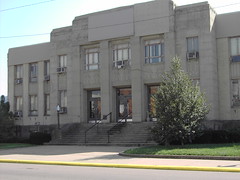
What is bad for Portsmouth’s image is not Mayor Kalb driving a 1999 car. What is bad for Portsmouth’s image, apart from the stupid utterances of Mohr and Kalb, is the way in which the city government is allowing the architecturally and historically important Municipal Building to fall into disrepair. Kalb and Mohr were willing to spend $9 million dollars to renovate a 124 year-old department store, but they would not spend half that to renovate the 72-year-old home of local government, the Municipal Building. Uncultured clodhoppers that they are, Kalb and Mohr are embarrassed by the Municipal Building, as Kalb is by his 1999 car. Oh, the ignominy of it! A man who had risen to the heights of being mayor of southern Ohio’s drug capital having to drive a car that old.

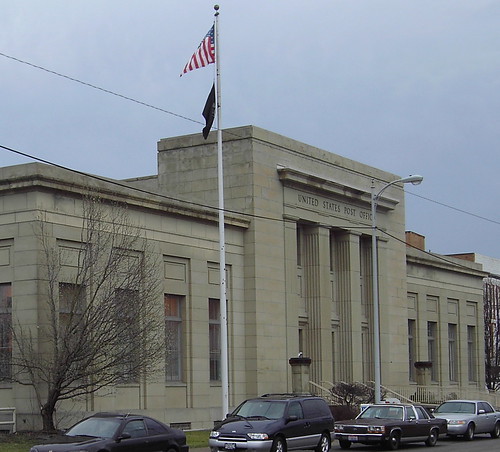
U.S. Post Office

The U.S. Post Office is built of the same material and in the same architectural style as the Municipal Building. The U.S. Post Office, which was built in 1935, one year after the Municipal Building, is one of the architectural treasures of Portsmouth. So is the Municipal Building, although neglect had made it hard to see. The Mayor and others are determined to tear down the Municipal Building because some developer reportedly wants the land to build a casino on. When and if gambling comes to the city, the developer wants that spot ready for slots. In Portsmouth, what developers want, developers get.

The way in which the Municipal Building has been labeled dilapidated and a deathtrap is not unlike the way in which the 15th Street viaduct land was declared toxic, sharply reducing its value. Then a developer, with Mayor Bauer’s connivance, bought the allegedly toxic 15th St. Viaduct land for a song, and has made a million on it. That same developer could be the one who will build a casino on the site of the Municipal Building and make millions.

The Federal government was willing to spend the money to maintain the Portsmouth U.S. Post Office. The city government does not want to spend a dime on the Municipal Building. The mayor wants the city to buy him a new SUV so that he can take visitors up the hill where the water tower is located, but he won’t fix up the home of city government for the visitors who come there. A restored Municipal Building is an infinitely better way to improve the city’s image than providing Mayor Kalb with a new SUV so that he can drive visitors up the water tower hill.

Leaky Chambers

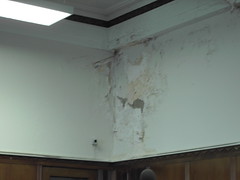
Speaking of water, what about the water that is leaking into the Municipal Building from the roof that the mayor won’t repair? What about the leaking corner of the otherwise graceful council chambers. The city government loves to display that leaky corner of the council chambers to visitors for the same reason a beggar likes to display his sores. The beggar should get his sores treated and get back to work instead of looking for handouts. The Mayor should get to work and have the leaky roof repaired and stop fretting about the humiliation of driving a 1999 car.

As for those new schools that Mohr likened to a SUV, let us hope that the generations of students who graduate from them will not seek to impress others by the jazzy cars they drive or the deafening music exploding from them. Let us hope they have higher ambitions in life than turning their cars into mobile boom boxes and their minds into empty receptacles for stimulants and status symbols. And let us hope that when those students are on their death beds, they can look back and take satisfaction in having been more than automaniacs at Cruisefests. Let us hope that they have higher ambitions than to become vice president of the city council or mayor of one of the most drug-ridden and corrupt cities in Ohio. Let us hope those students will climb to greater heights than can be reached by an SUV. Let us hope.
25_162776_D1_Cars_Ramone_1nS.jpg
"Vrroomm-vroomm" (Pixar Studios)

Wednesday, May 17, 2006

Automania

Escalade
Cadillac Escalade


By "Automania" I refer not to the car stereo installation business of that name owned by a Portsmouth city councilman but rather to the mania for big automobiles on the part of Portsmouth public officials, such as the mayor, who wants a new Ford Expedition and the police chief who drives a Cadillac Escalade and who wants fifteen new Ford Crown Victoria police cruisers. I learned about these wants at a Portsmouth City Council special meeting on Monday afternoon, May 15, 2006, that should be remembered as a Mid-May Mid-day Automobile Salesman’s Dream. The opening sentence in Jeff Barron’s report on the meeting in the next day’s Portsmouth Daily Times was “Passing the capital improvements budget is one of the more tedious things the Portsmouth City Council does each year.”

The meeting was tedious, I agree, but it will also be painfully expensive for Portsmouth taxpayers, especially when they get the bill for Police Chief Charles Horner’s automania.

In the May 2nd primary, Horner had asked the voters to approve a tax increase to help fund his war on drugs. Portsmouth is notorious as the drug capital of Southern Ohio and as one of the most crime-ridden cities not only in Ohio but reportedly the nation, as the chief frequently pointed out in making his case for higher taxes. But the voters rejected his call for more money for the police dept. They turned him down, I believe, not because they disagree about Portsmouth’s ignominious standing in national crime rankings. They turned him down because they don’t think Horner is the solution to Portsmouth’s crime and drug problems. Some even believe he is part of the problem.

Horner has not been any more successful dealing with drug-dealing in Portsmouth than he has with drug dealing within his own family. As Austin Leedom and John Welton revealed in the Shawnee Sentinel, the chief’s own son was arrested for using and selling drugs. The chief’s son was dealing drugs at Damon’s Restaurant, directly across the street, less than fifty yards from the Portsmouth Police Department. Horner accused Leedom and Welton of crucifying his family by releasing this information about his son, but if they hadn’t, very few people would ever have known of the younger Horner’s drug arrests. The Portsmouth Daily Times does not investigate crimes by the over-privileged of Portsmouth, and all references to the young Horner’s drug arrests were subsequently expunged from public records at a judge’s order.

Horner cites the high crime rate and drug dealing in Portsmouth in particular to justify his requests for more money for the police dept. But he does not stop there. He has also warned publicly that there are “domestic terrorists” among us, by whom he means the Concerned Citizens of Portsmouth and Scioto County. What form of terrorism is this group of largely senior citizens engaged in, other than revealing the drug arrests of the chief’s son and recalling incompetent and corrupt officials from office? The chief doesn’t say, perhaps because it’s classified information in his war on “domestic terrorists.”

Though he himself precipitated the 2004 successful recall of former Mayor Bauer, who was reportedly preparing to fire him, Horner unleashed a full-scale investigation of one of the Concerned Citizens, native American Russell Cooper, who was trying to mount a recall campaign against councilman David Malone. There are good recalls and there are bad recalls, Horner told the city council a while back, by which he meant that the recall that got Bauer out of office and kept Horner in as chief was good, and that the recalls that tried to remove Malone and other current council members from office were bad. The Portsmouth police swooped into Cooper’s neighborhood and did a dragnet investigation on the basis of several alleged forged signatures on Cooper’s petition ballots. Cooper is awaiting trial and faces possible jail time. Don’t look for any suspended sentence and expunging of records for Cooper.

Those Concerned Citizens who dare try to recall Horner’s allies on the city council are treated like domestic terrorists, but those who deal in drugs do not warrant a full-court press, especially if they have relatives or friends in positions of influence. At Ted Journey’s West End Auto, which is located less than a mile from the police station, stolen cars until recently were chopped up and oxycontin distributed. Ted Journey is a friend of councilman Tim Loper, who was renting a house from Journey, not far from the chopshop. Claiming that house as his legal residence was Loper’s way of keeping his seat on the city council. Loper was living in the Sixth Ward, but this being Portsmouth he didn’t think the residency requirements in the city charter applied to him and the city solicitor agreed. Anyway, it was other law enforcement agencies, not the Portsmouth Police Dept., that cracked down on Journey’s West End Auto operation. Horner claimed that he was just about to pounce on West End Auto when others beat him to it. Sure.

15 Crown Victorias

At the special May 2nd election, Portsmouth voters declined to be panicked by Horner’s scare tactics, but the city council at the May 15th meeting gave him what he asked for: the lease of 15 8-cylinder Ford Crown Victorias at a cost of $410,000 over a period of five years. Horner wanted these vehicles and he wanted them now. He asked the council to suspend the rules that required three readings of an ordinance, because he had to act before Friday the 19th to close the deal. We’ve all heard this one before: “Hurry, for you must act now to qualify for this amazing offer!” With the exception of Councilman Mollette, the rest of the council fell for it like sleepy couch potatoes watching an infomercial.

It is not clear that the city needs fifteen new police cruisers or that leasing them for five years for $410,000 is the best way to obtain them. It is no secret that leases are more expensive than purchasing, and that five-year leases are more expensive than three-year leases, especially since manufacturer warranties run out after three years. Since these vehicles will be driven to and from work by police, including police who live outside the city limits, the fuel costs were of concern to councilman Mollette, but in Horner’s view in the war on drugs and domestic terrorism we can’t afford to count the cost of gas. “Have you considered gas mileage on the cars?” Mollette asked Horner, as reported in the Daily Times. “No, I haven't,” Horner replied.

But what are the gas costs we can’t afford to count? Using EPA estimates of gas consumption of the Ford Victoria, I calculate that over a period of the five-year lease, if gas prices remain about where they are, and the vehicles are driven an average of 12,000 miles a year (the mileage limit on most leased automobiles), the cost of gasoline for the 15 vehicles alone, not counting oil and maintenance, will be hundreds of thousands of dollars. When we add the cost of fuel to the $410,000 cost of the 5-year lease, we get a figure that would cause sticker shock among voters if it were made public. Councilman Mollette told the council that other Ohio cities do try to seek economies on the purchase of police vehicles, but presumably those cities do not have as high a crime rate or as many "domestic terrorists" as Portsmouth does, so they can be more cost conscious.

Just how many cruisers are there in the department? Jeff Barron reported that “Police Chief Charles Horner wants to replace all 15 police cars with new ones.” Is fifteen the total number of cruisers, as Barron seems to imply? There are about 40 officers in the department and I have heard they each have a cruiser that they drive to and from the police station. So the department may have a fleet of about 40 cruisers. The rationale I have heard for what seems like a very expensive arrangement for the taxpayers is that the cruisers that are parked all over the city in front of the officers’ homes are an effective crime deterrent. That might be the case if officers live in high crime neighborhoods within the city, a big if, but in any event it does not sound like a cost effective way to wage war on crime. Perhaps Jeff Barron could look into this matter, at least to the extent of finding out whether there are 15 or 40 cruisers sitting parked at various times in front of officers’ homes.

When Horner was asked by Mollette if he would consider using some of his discretionary fund ($240,000 derived partly from drug busts) in his Special Account to defray the cost of his war on drugs, the chief replied he would not. “It's prudent to maintain that money for an emergency, like the possible flu pandemic,” Horner said. “Horner,” Jeff Barron explained, “was referring to a possible outbreak of bird flu which some health officials say may hit the United States.” Horner’s handling of that Special Account has become a hot political issue, because he seems to view monies that end up in it as hornerrariums. Critics of the Special Account have labeled it a "slush fund."
bird flu

City Auditor Trent Williams recently wrote a memo to Horner indicating the chief had to follow state laws in administering this fund, which he has apparently not been doing. Williams wrote, “As a result of our recent discussions of and exchange of information with the Athens Regional Office of the Auditor of State regarding the checking account currently being held by the Chief of Police known as the ‘Portsmouth Police Department Special Account,’ it has been advised and therefore necessary that all funds in this account be deposited immediately with the Portsmouth City Auditor’s office.”

Like a certain prominent politician in Washington, Horner uses scare tactics, everything from domestic terrorism to bird flu, to escape accountability, while the chief crime problem in the city, drugs, continues to plague the community. The trouble, I believe, is that Horner is too much of a politician and not enough of a police chief. Unfortunately, he is not much better as a politician than he is as a police chief, as the police vehicle that he drives, a Cadillac Escalade, illustrates.

Tony "Escalade" Soprano

A politician should be concerned not only about reality but also about appearance. In fact, most politicians care more about appearance than reality. What then is the chief doing driving a fucking Escalade? Pardon my English, but I’m falling under the influence of Tony Soprano. Doesn’t Horner have a clue that the Escalade is known in the trade as “Tony’s Car,” meaning Tony Soprano, who owned not one but two of them? Hasn’t the connection between Tony and the Escalade been made clear on the Shawnee Sentinel website, which Horner monitors closely? The New Jersey TV mobster can afford to drive a gas guzzling Escalade SUV, but can the police chief of a perennially depressed and crime-ridden city in southern Ohio’s Appalachian region with gas at about $3.00 a gallon? The story I’ve heard is the chief obtained the Escalade in a drug bust, so it fell into that controversial Special Account of his for which there has been no accounting. We hope the chief will sell the fucking Escalade to help defray the cost of those 15 new cruisers, and please no bullshit about how that account has to be reserved for real emergencies, like the bird flu. Give up the gas-guzzler. A remote-controlled toy Escalade was advertised on e-Bay for $400 bucks, if the chief wants a memento of his salad days.

Not only did Horner request $410,000 for new cruisers at the May 15th council meeting, he also requested $30,000 for new furniture for the old Adelphia building, which he will be moving into when it is renovated at great public expense. (The voters killed the Marting’s renovation on May 2nd, but unfortunately they were not given the opportunity to vote on the Adelphia renovation.) There are rumors out of the Municipal Building that when the chief gets mad he goes into his office and busts up furniture. Let’s hope, if he has to give up his Escalade, he doesn’t take it out on the new furniture in a fit of automania.

Muel
drawing by Susanne Muel